The Freedom (and need) to Forage
“One of the most beautiful things about foraging is that it puts you in touch with every single step of the meal process: identification, harvest, processing, cooking, serving, sharing, and consuming. That’s an incredibly rare experience in today’s food system — and a deeply human one.” (Dr. Bill Schindler)
Freedom for us from early childhood on, was always connected to being outdoors, whether collecting wild herbs and berries with our parents or grandparents, being in the forest with our scouts group, fishing in the nearby river or taking long cycling trips through the countryside. In the late 50s and early 60s foraging in the forest was often a necessity for German families providing food for free from the wild. Getting food from hedgerows was still common in Ireland 40 or 50 years ago.
Considering what is going on in the world right now we also see foraging in a new light, building resilience, being resourceful. The late Manchan Magan: ”For food security alone, we owe it to ourselves to become familiar with the scores of edible plants that are growing wild all around us.”
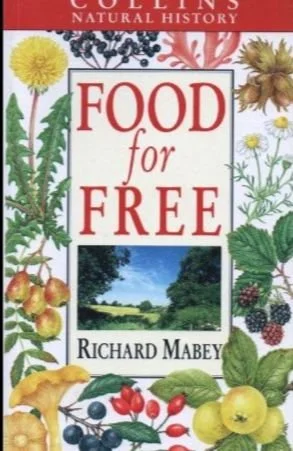
Food for Free
Richard Maybe published the first edition of Food for Free in 1972, which interestingly “coincided with the beginning of public concern about the natural environment and the quality of our food” (from the introduction). Since then the interest in wild food has “mushroomed” as he says. The 50th anniversary edition was published in 2022.
What was seen as a counter culture then has now entered the mainstream and it would be hard to find a serious restaurant in 2025 that does not feature some wild ingredients on it’s menu. Some wild foods have become popular enough to go commercial, just look at the ingredients of craft beers.
Tom Curtis and Paul Whelan published “The Wild Food Plants of Ireland: The complete guide to their recognition, foraging, cooking, history and conservation” in 2020 with the aim to “show chefs, cooks, foodies, foragers, seed savers, farmers, botanists, and the general public the richness of our wild flowering plants, which have been and still are used for food.”
Freedom to roam
In Nordic, Baltic and Alpine countries the freedom to roam is sometimes called the right of public access to the wilderness or the “right to roam”. While on a Slow-Tourism adventure in Finland a few years back, we were struck by the fact that foraging in the forests is not only part of traditional Finish culture, but is also covered by what they call “Everyman’s rights”.
“Public access rights, or so-called everyman’s rights, refer to the right of everyone in Finland to enjoy outdoor pursuits regardless of who owns or occupies an area. You do not need the landowner’s permission, and there is no charge. However, you must not damage the environment or disturb others while exercising public access rights.” (Ministry of the Environment).
Our guide explained, that in a land two-thirds covered with thick forests, rich with edible delights throughout the year such a mushrooms, berries and other plants, one in four Finns head out to forage. In fact, they top the world charts for it. “This is our free organic supermarket right on our doorstep”, she said matter of fact, “and also to spend time in nature, it’s forest bathing before that term existed.”
The revival of foraging in Ireland
Foraging in Ireland has seen a revival in recent times, even the term seems new. When we arrived here in 1985 we called it picking at a time when people still were out picking blackberries for jam or sloe berries for making ‘country wine’.
To our knowledge the first organised foraging tour happened at the Green Festival North West, at The Organic Centre in Leitrim in September 2003 with food historian Regina Sexton. Back then we wrote in the programme notes that “Regina Sexton will also speak about food and ancient customs, which then will be followed by a scavenging for food expedition”. So we didn’t even use the word foraging then.
Fast forward to 2023 and foraging tours, walks and courses are available in every part of the country, led by experts in the field. Apart from foraging for mushrooms in woodlands or seaweed on the shore, Irish hedgerows with some 700 000 kms are probably the best habitat to forage for free. Hips and haws, bilberries, rowan berries, elder berries, hazelnuts and crab apple, all feature prominently in the foraging calendar as well as nettles, dandelion, daisies, red clover, plantain and sorrel.
At a seminar “Food from Hedges” during Hedgerow Week 2021, organised by Teagasc the afore mentioned Regina Sexton spoke about the change in value and status of wild foods. She spoke about food systems through time and referenced “the economic value and protection of wild foods in medieval times. And the more we became food consumers there was more value put on food that we buy whereas food for free was seen as of inferior value. This has now changed and is often driven by chefs and restaurants”. We remember meeting JP McMahon from Aniar restaurant and cooking school in Galway at one of the first foraging walks organised with expert Joerg Muller at The Organic Centre in 2006. “Foraging is exciting and creative,” McMahon said, “it definitely makes cooking more interesting.”
Melanie May wrote in an article for Good Food Ireland: “While hunter-gatherer culture was once the way of life, modern society is far more accustomed to hunting in the supermarket aisles and greengrocers for neatly packaged and clearly labelled herbs, fruits and fungi.” (Wild and Free, The Revival of Foraging in Ireland, 1/5/2021), but this is all changing and for many people going out and collecting wild foods is a way to reconnect to nature. Consumers of food are often alienated and distanced from the production of food and re-discovering wild foods and their value is a way to break that distance.
Miles Irving comments on the changes in attitude towards wild food in the introduction to his “The Forager Handbook”, published in 2009: “For some people, eating wild foods has become almost shameful – a reminder of the hard times they would prefer to forget. It amuses me to witness this attitude turned on its head; to see these humble wild plants given pride of place in some of the most prestigious restaurants in the world.”
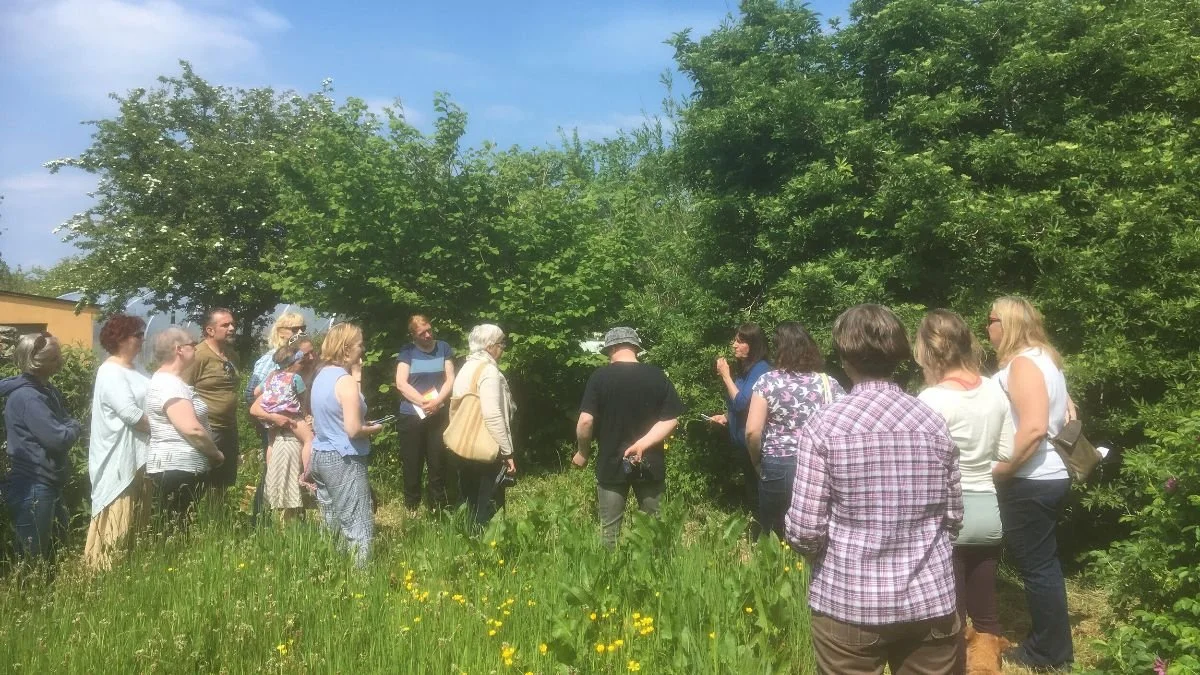
Having organised foraging walks for over 20 years, we can testify to the powerful effect it has on how people see the natural world. Suddenly they find themselves an active part of it, rather than merely an onlooker. “Foraging immerses us in the world, and we come to know it, love it and seek to protect it.” (John Wright, The Foragers Calendar)
Wild and free
Wild plants need no cultivation and looking after, all they need is being found and harvested. They grow without the help of gardeners and farmers and are resistant to changeable weather patterns. Wild plants are more immune to most pests and diseases, because they have to fight to survive and therefore have retained many natural defence mechanisms.
Wild plants are always available fresh, they are not harvested unripe and shipped around the world. They are also nutrient dense. Wild plants generally have higher nutrient contents than most their cultivated vegetables.
In the current climate we are all searching for ways to boost our health and support our immune system to combat germs and fight the outbreak of viral infections. Natures larder is bursting with wild plants right now as we move into Spring and there is much to forage in the hedgerows and along the shoreline to make tinctures, teas and oils with or just add as health boosting ingredients to your usual meals.
We encourage all readers to go on a walk or tour with an experienced forager, you have the freedom to do it.
…and please follow the basic rules
1. Never pick a plant, that you don’t recognise.
2. Only pick what you need.
3. Choose a clean spot when foraging.