
“You need to be a bit mad to make cheese" - Hans & Gaby Wieland in The Daily Spud
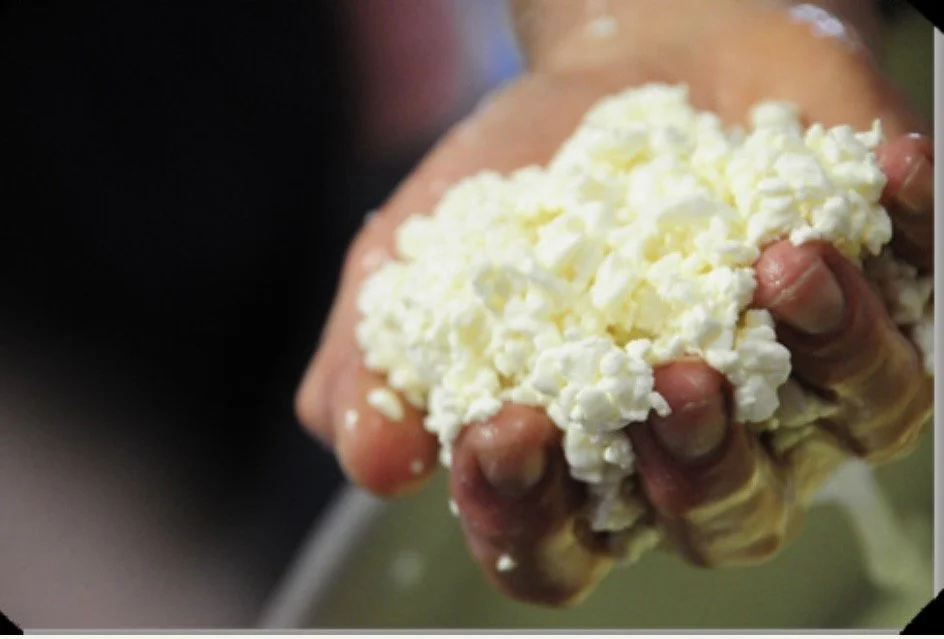
During a recent ramble through our past (as documented in the world wide web) we found this article by Aoife from The Daily Spud.
“You need to be a bit mad to make cheese.”
So says Hans Wieland of The Organic Centre in Rossinver, Co. Leitrim.
I do believe that he counts himself in this. When he and his wife Gaby started making cheese from the milk of their own goats over 20 years ago, they built a kitchen for their cheese making before they built a house for themselves.
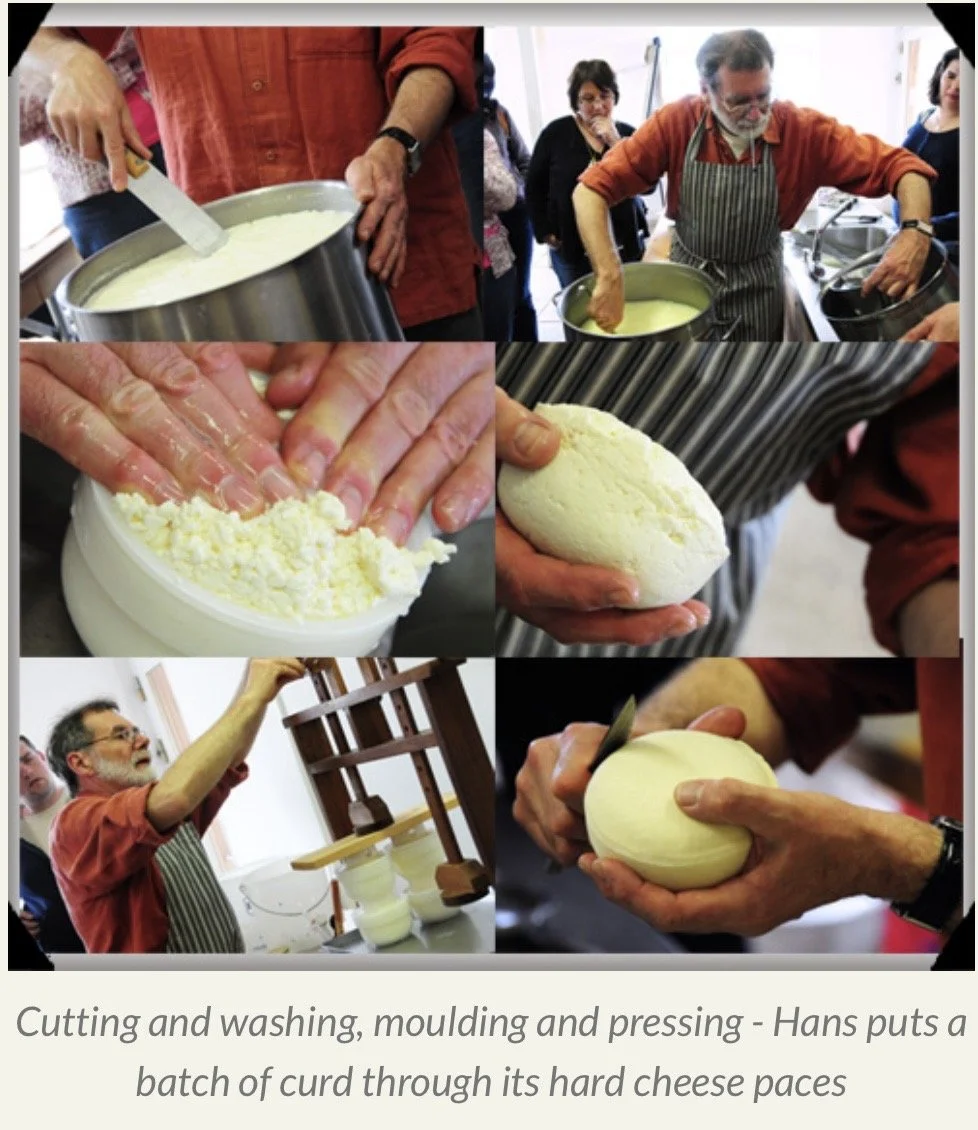
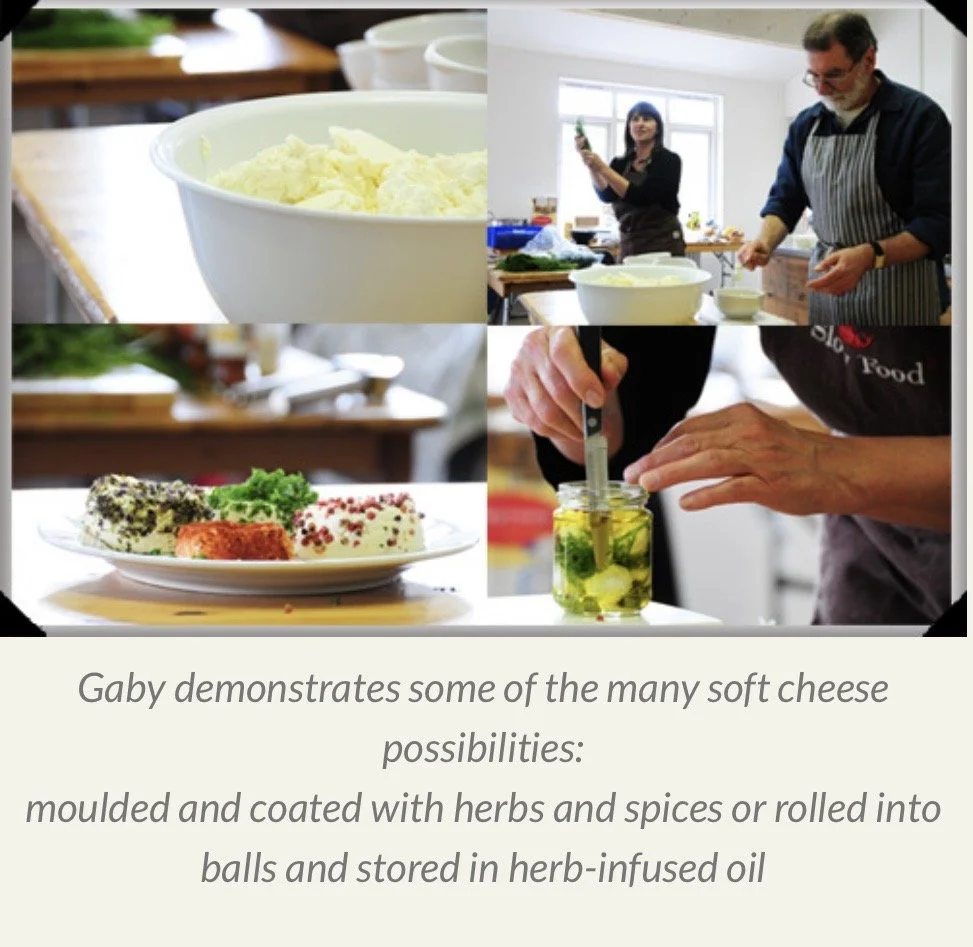
I learned this and a lot more besides when I headed to Leitrim last weekend to attend a hugely instructive cheese making course run by Hans and Gaby, during which we were taken through the processes of making both hard and soft cheeses and given an insight into the practicalities of small-scale commercial cheese production.
The biggest lesson of the course, and the one that I think they most wanted us to learn, was that, once you understand the basics of the processes involved, cheese making (and especially the making of soft cheeses such as quark) can be done quite simply and, for a small scale operation or for home use, without a lot of special equipment. You need a big pot for milk, some bacterial culture and rennet to separate curds and whey, a knife and whisk to cut the curds, a thermometer to make sure that the cheese making bacteria have a cosy temperature at which to operate, some muslin for draining the curds, some plastic moulds for shaping and a lot of practice.
As with cooking and baking, there are recipes for producing different kinds of cheeses, though with practice, you will get to know how the particular milk you use behaves during the cheese making process and adjust the recipes accordingly. If nothing else, learning how to make cheese forces you to discard the idea that milk is just, well, milk.
Milks can vary greatly in fat content and other characteristics, depending on the type of animal producing the milk, the breed, the vegetation they eat and the soil that produced that vegetation. The notion of terroir, it seems, is as relevant for milk and cheese as it is for wine. Raw, unpasteurised milk will generally produce cheeses with more flavour, but you do need to be sure of the quality of your milk supply if you go that route.
Different bacterial cultures, too, will produce different effects. For example, lactobacillus helveticus, developed in Switzerland, is responsible for emmental’s nutty taste, while propionic acid bacteria are the ones responsible for producing the holes (more properly called eyes) in that most swiss of cheeses.
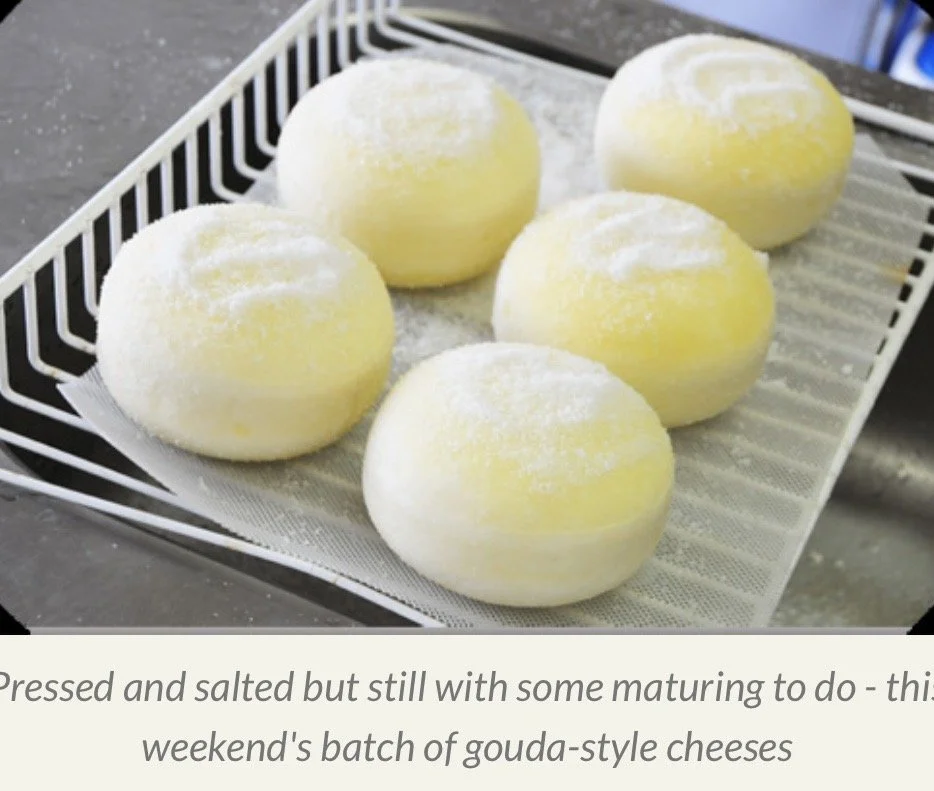
There are other factors, too, which influence the final cheese product. The size of the pieces into which you cut the curd, for example, will determine the hardness of the cheese – the smaller the curd particles, the less moisture they retain and the harder the resulting cheese. Washing and/or cooking the curd, which may be done after the curd is cut, also influences texture and taste – you’ll get a stronger-flavoured cheese if the curd is heated in pure whey and a milder taste if some of the whey is replaced with hot water.
And there is much else besides. The mere fact that there are so many vastly different cheeses to be had is testament enough to the many different factors at play in their production.
The only real question now is whether I am mad enough to make cheese myself.
And the answer?
Positively certifiable.
Hans and Gaby’s Homemade Quark
Quark is a fresh soft cheese, made from either cow’s or goat’s milk which, with reasonably little effort, can be ready to eat within 24 hours.
Specialist cheese suppliers are your best bet for sourcing cheese making cultures and either animal or vegetarian rennet.
You’ll need:
10 litres cow’s or goat’s milk
100 ml of culture (or 150 ml buttermilk)
5-10 drops rennet
You’ll also need:
Large stainless steel pot, at least 10l capacity
A thermometer.
A long knife for cutting the curd – ideally the blade should be longer than the depth of the milk in the pot.
A sheet of muslin.
A bucket with drainage holes or other receptacle which will allow liquid to drain away – a very large colander might do the trick.
The Steps:
Heat the milk in a stainless steel pot to between 27 and 32 celcius (we used 27 degrees for our goat’s milk quark and 29 degrees for the cow’s milk version; increase the temperatures slightly if the milk has a very high fat content).
Remove from the heat and stir in the culture or buttermilk. Allow it to sour for 5-6 hours at room temperature.
Add the rennet – 1 drop per litre for firmer quark, 1 drop per 2 litres for softer quark – and stir using a scooping motion going from the top to the bottom of the liquid.
Leave again at room temperature – the milk will thicken and form a curd after about 2-4 hours. Probe by cutting the curd with a knife – if the cut stays open and whey appears, proceed with cutting, otherwise wait.
Place your sheet of muslin into a perforated bucket or colander. The muslin should be big enough to line the container and drape over the sides. Place the muslin-lined container into a sink.
Cut the curd into cuboids by making a series of cuts top to bottom and left to right across the curd mass. Allow to rest for a few minutes then start scooping the curd into the muslin using a ladle or skimmer.
Gather together the ends of the muslin and twist together so that the curd is covered. Leave at room temperature overnight, after which it’s ready for consumption.
Store in the fridge, where it should keep for about 10 days. Quark can also be frozen.
The Variations:
You can have your quark plain or mixed with herbs, on a baked potato, mixed with fruit, on a pizza, made into a cheesecake or in any number of other ways.
The Results:
This should yield around 2-2.5kg quark
Gaby’s Horseradish Quark
This was a wonderfully fresh-tasting combination that we got to try using some of the soft cheese made on the course. It goes without saying that you don’t have to make your own cheese in order to enjoy this, it’s just very satisfying if you do.
You can think of the quantities here very much as guidelines – just add as much apple, horseradish, lemon juice and salt to the cheese as is to your taste.
You’ll need:
250g quark or other fresh, soft goat’s or cow’s milk cheese
Half of a small-ish eating apple, around 75g, grated
1-2 tsp finely grated fresh horseradish, or to taste
lemon juice to taste
salt to taste
The Steps:
Mix the quark with the grated apple, grated horseradish, a squeeze of lemon juice and a good pinch of salt. Taste and add more of whatever you think is needed.
Spread on bread, toast or crackers and enjoy.
The Variations:
I’d imagine that you could try this using cottage cheese or cream cheese in place of the quark.
The Results:
250g of horseradish quark