
Grains of change – The challenge of growing quinoa!
(This is an article I wrote for Positive Life Magazine Winter 2014 issue.)
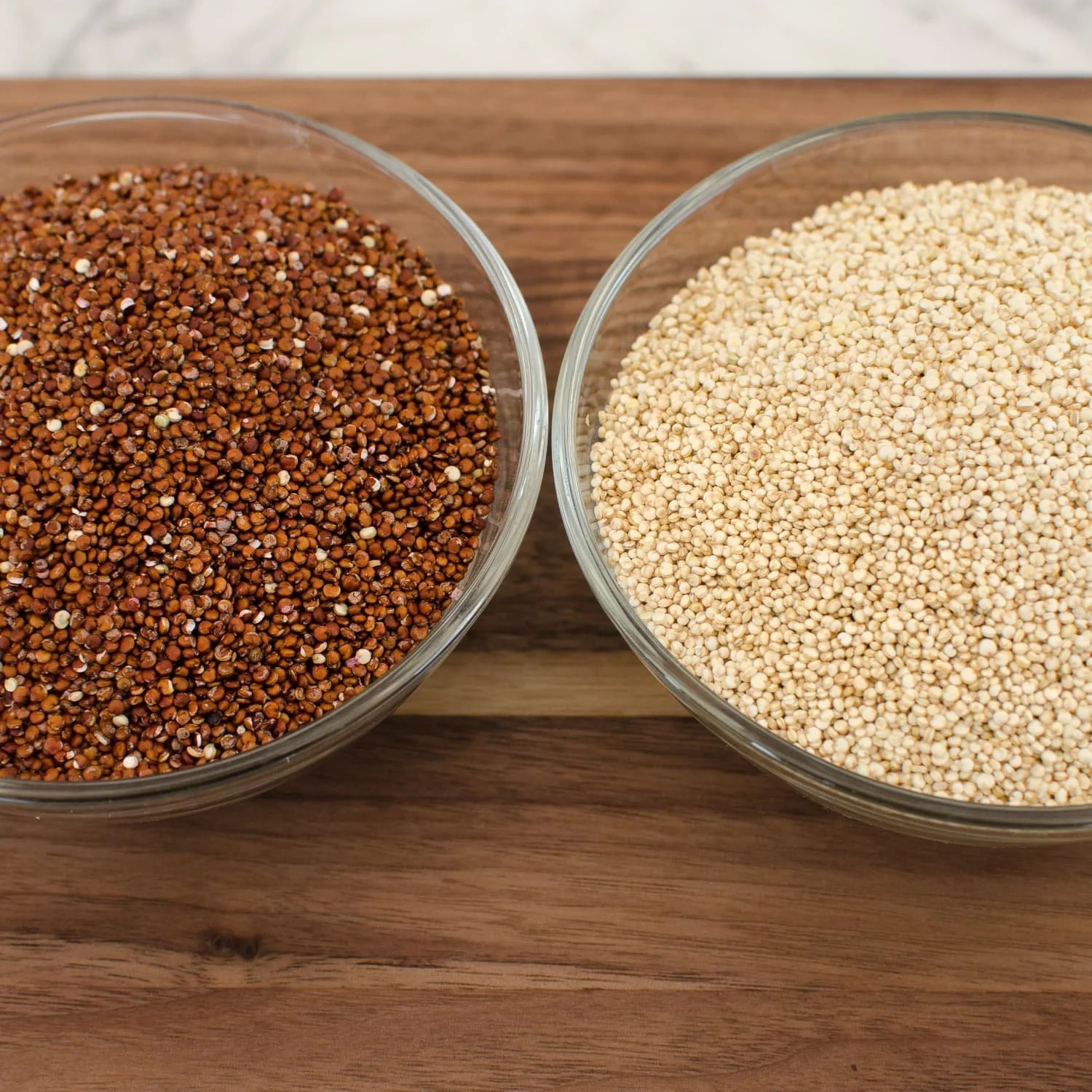
At home my wife Gaby began cooking with Quinoa about 10 years ago and just bought it in the local health food shop not really paying too much attention that it wasn’t grown in Ireland or even Europe for that matter. We used it because of its high protein content and because it is gluten free, the exact reasons why this seed of an ancient cereal grain of Peru is enjoying a revival. People suffering from an intolerance to wheat or Coeliacs who suffer from a serious reaction to gluten in wheat and also rye, barley and oats have turned to eating Quinoa.
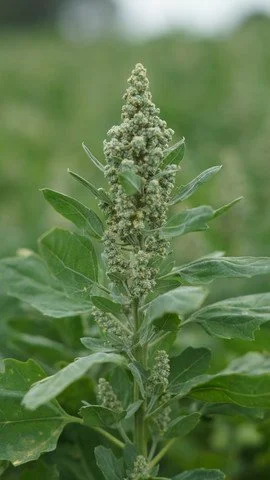
Quinoa (Chenopodium quinoa) is a fast maturing annual with a mild nutty flavour. It has been grown the length of South America for possibly 3000 to 5000 years, but is now restricted to Peru and Bolivia as can be seen on the label of origin. It is very versatile and can be substituted for any grain, used whole as a cereal or ground into flour.
Compared to all the grains it has the highest protein content, more calcium than milk and is higher in fat content than any other grain, thus eminently suitable for vegetarians looking for nutrient concentrated foods. Quinoa comes closer to meeting the genuine protein requirements of the human body than either cow’s milk or soybeans.
Can we grow Quinoa in Ireland
Well we started a trial at The Organic Centre early this year. Despite being told to sow seeds direct from early May when the soil has really warmed up, we sowing seeds in modules in April and planted seedlings in a side ventilated polytunnel in May. The spacing was in rows 45cm apart with 30cm between the plants. The plants grew up to 2 m tall and are quite disease resistant, but need good fertile, free draining soil. They are a low maintenance crop if the beds are weed free, which is easier to achieve in a polytunnel than an outside garden.
As I write this article in October we are about to harvest the crop. The leaves have fallen, leaving just the dried seed-heads. We are drying them in our seed shed hanging from the beams in paper bags to catch any fallen seeds.
One of the most important questions for our trial was to find out if the yield merits the labour and time growing it for ourselves. I hear 30-60gm of seed per plant is common but that you can easily get over 170gm per plant grown in rich soils. The yield of our trials looks more like former. So in order to produce 1 kg of seeds we need about 20 plants and that is what we have planted in our 3m long bed.
One kg of Quinoa costs between €14 and €22 in the shop. But you can also see it like this: 2 meals for 4 people from an area of 3square meters. We eat Quinoa together with rice and vegetables or in a tabouli.
The question is who will take on the challenge to grow it on a field scale?