
Gratitude – Healthy for Body and Soul
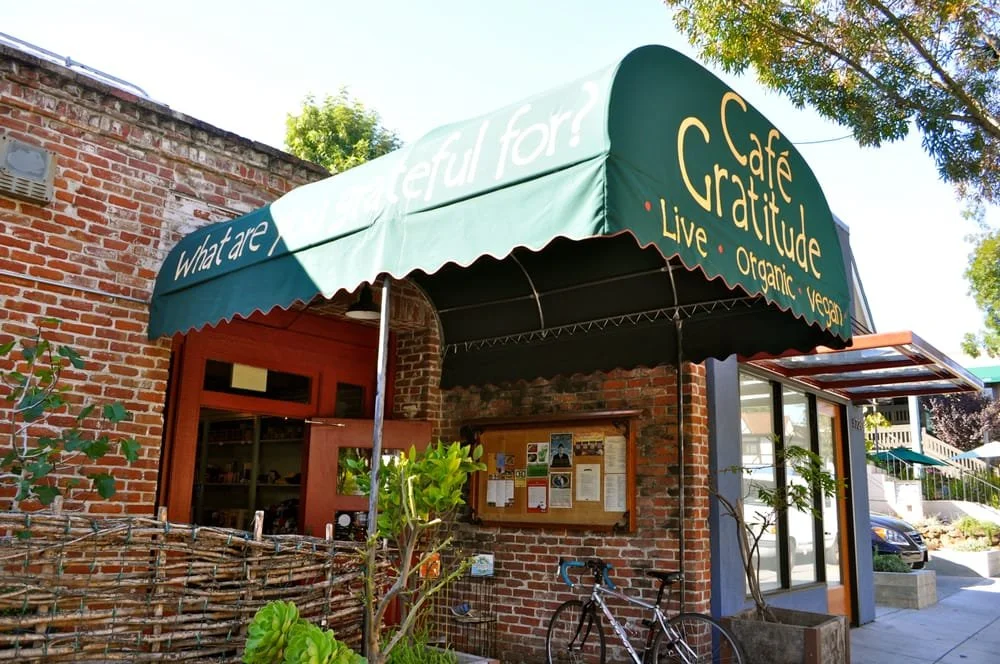
While in Berkeley, San Francisco, in 2009, we went to Cafe Gratitude a few times, mostly because of the delicious cakes, but also because of their commitment to “sustainability and organic living foods”. In the introduction to their cookbook ‘I Am Grateful’ they write: “Cafe Gratitude is our way of giving back; we want people to be empowered in life to make choices that support the planet and ourselves. A conscious, sustainable diet is a big part of that choice.”
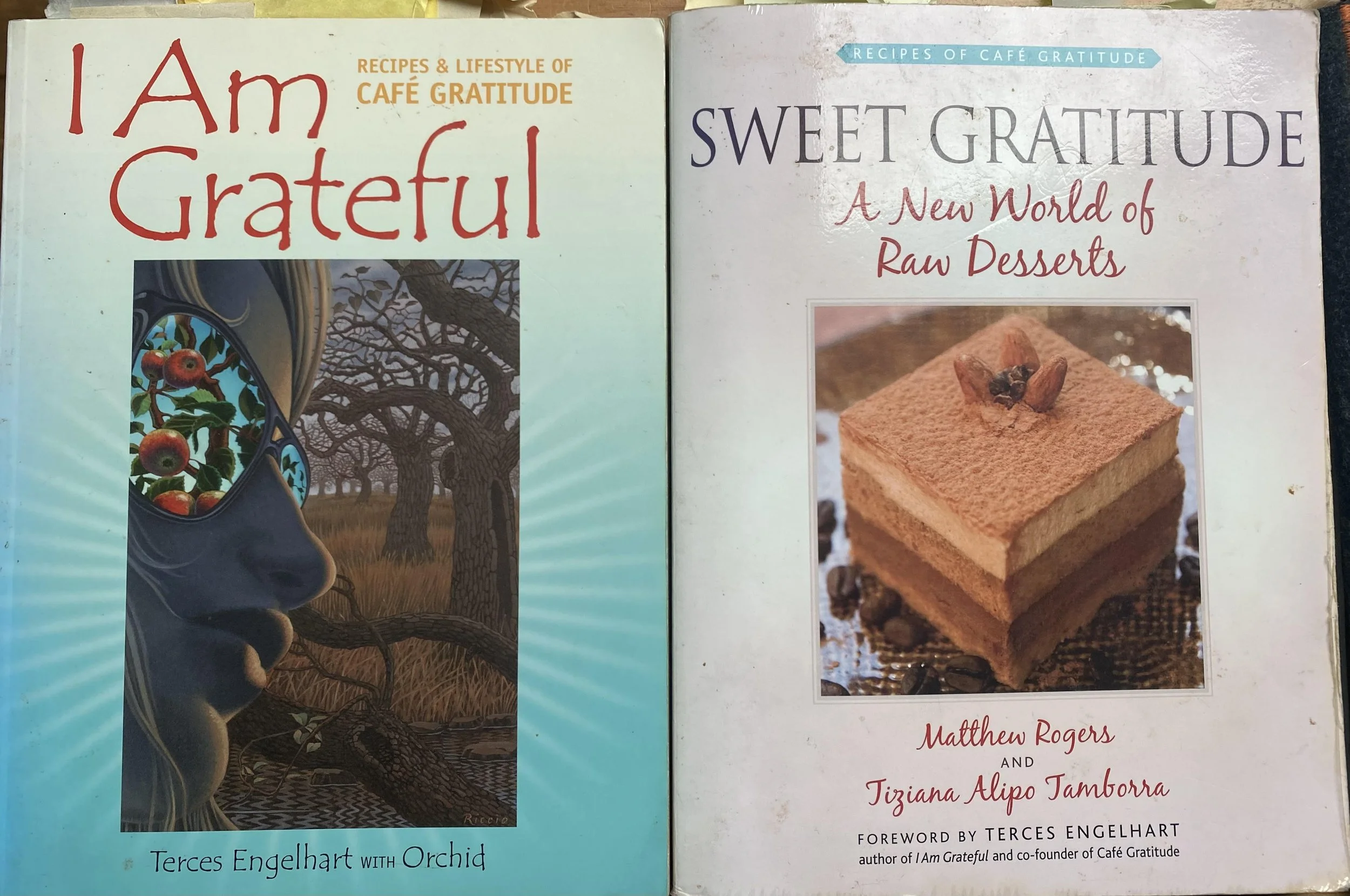
To be asked “What are you grateful for today”, while ordering your food, could be a bit too much for some (including us!), but you can’t fault their food and their cookbooks have become a constant in our kitchen. The flaxseed crackers, that many of our course participants enjoy, are from the ‘I Am Grateful’ cookbook, and our Coconut-Lime Cheesecake recipe is inspired by the ‘Sweet Gratitude’ cookbook.
Practicing gratefulness or being grateful is a concept that many people incorporate in their daily lives in many different ways, consciously or often unconsciously. In another act of serendipity, while selecting the recipe for our Valentine’s section of the February newsletter, we came across an article about Gratitude - healthy for body and soul in a German Magazine we are subscribing to.
(The following is a translation of parts of an article by Ingrid Zehnder, published in Gesundheitsnachrichten January/February 2026)
“Being grateful can be the key to life satisfaction – and ultimately, to a longer life.
Scientific studies by psychologists, neuroscientists, and physicians show that gratitude contributes to mental health, greater well-being, and better relationships. Grateful people are more optimistic and happier than those who hardly value this feeling. For a long time, psychology focused primarily on mental illnesses and disorders. Positive aspects of life received little attention. Thus, the topic of gratitude only gained wider recognition around the year 2000.
A pioneer in exploring this topic was psychology professor Dr. Martin E. P. Seligman, born in 1942, who still teaches at the University of Pennsylvania, Philadelphia. In the 1990s, he developed the concept of Positive Psychology, which aims to explore and cultivate what makes life most worth living. According to Professor Seligman, experiencing positive emotions is a key building block for a fulfilling life.
Consequently, research has focused on people's positive strengths and topics such as happiness, well-being, optimism, trust, forgiveness, and gratitude. Of particular importance is the feeling of personal well-being, of individual life satisfaction.
But what exactly is gratitude?
Whether, as a child, we were handed a treat at the counter and our mother admonished us, "What do you say?" or whether our godfather sent the wrong birthday present and we were told, "You absolutely must say thank you," this superficial, formal (at best, polite) form of gratitude is not what we're talking about here.
Rather, it's about being aware of the good things in life and appreciating them. Dr. Robert A. Emmons, Professor Emeritus of Psychology at the University of California, Davis, USA, is considered an internationally recognized expert on gratitude.
He writes: "At the beginning of all gratitude is the recognition of all that is good and its origins. The understanding that life owes us nothing and that everything good we have is a gift. As well as the knowledge that we must not take anything for granted... To be able to live in gratitude in the long term, three steps are necessary: seeking out the good, accepting it, and giving something back."
Professor Emmons also confirmed through his research that practicing gratitude and recording things for which one is grateful has many positive aspects: On the one hand, gratitude increases helpfulness, enriches and facilitates social life, and on the other hand, promotes self-esteem, well-being, and joy in life.
The strategies most psychologists recommend for cultivating gratitude are:
· Keeping a journal and writing down three small or large things you are grateful for each evening or at the end of the week
· Writing or sending a letter to someone you are grateful to.
· Thinking about someone you are grateful to.
· Practicing saying "thank you" sincerely.
· Consciously experiencing the small joys of everyday life.
· Enjoying contact with nature (in your immediate surroundings or while traveling).
· Seeking out positive experiences and surprising moments.
· Not taking the kindness and help of others for granted.
· Not isolating yourself, giving back, and being helpful. “
And to finish with another serendipitous moment, a study by Prof. Jane Taylor Wilson at the Westmount College in Santa Barbara, where Gaby and I spent Valentines Day in 2009, 110 students undertook a study about practicing gratefulness: Group one had to note five things of being grateful for daily, group two three times a week, and group three once a week on a Sunday evening.
“In the first two groups, a significant increase in feelings of gratitude and appreciation was measured in the short term. However, only in the third group did the level of happiness change sustainably—these participants were happier in the long run. The researchers suspect that the exercises become more like mechanically performed tasks if they are done too often. While gratitude exercises can help many people, it is important to always pay attention to moderation and listen to your own intuition. Completing assigned tasks should never become a chore or lead to stress. After all, gratitude is just one way to increase well-being.”