
Thyme - how to grow and use
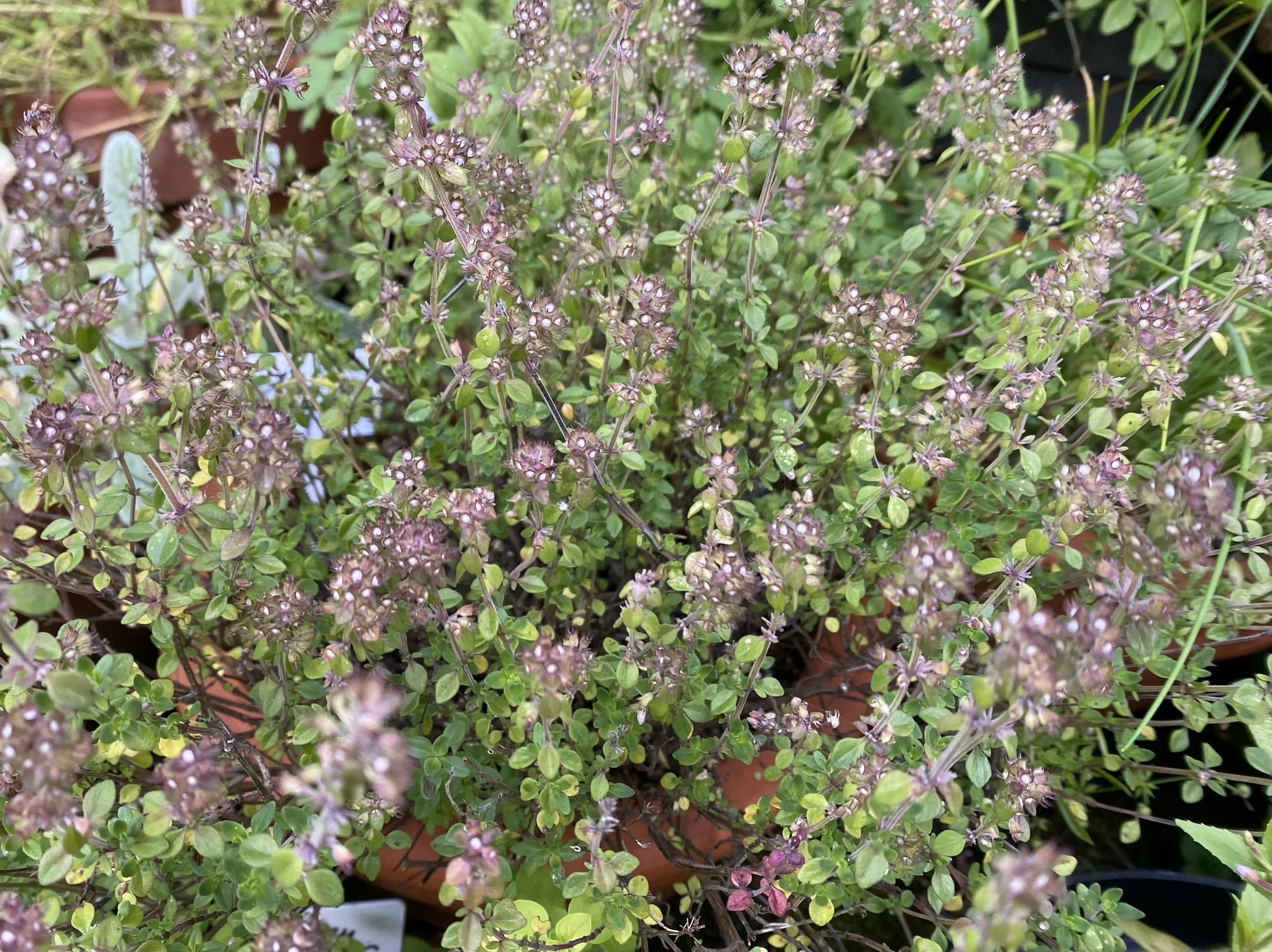
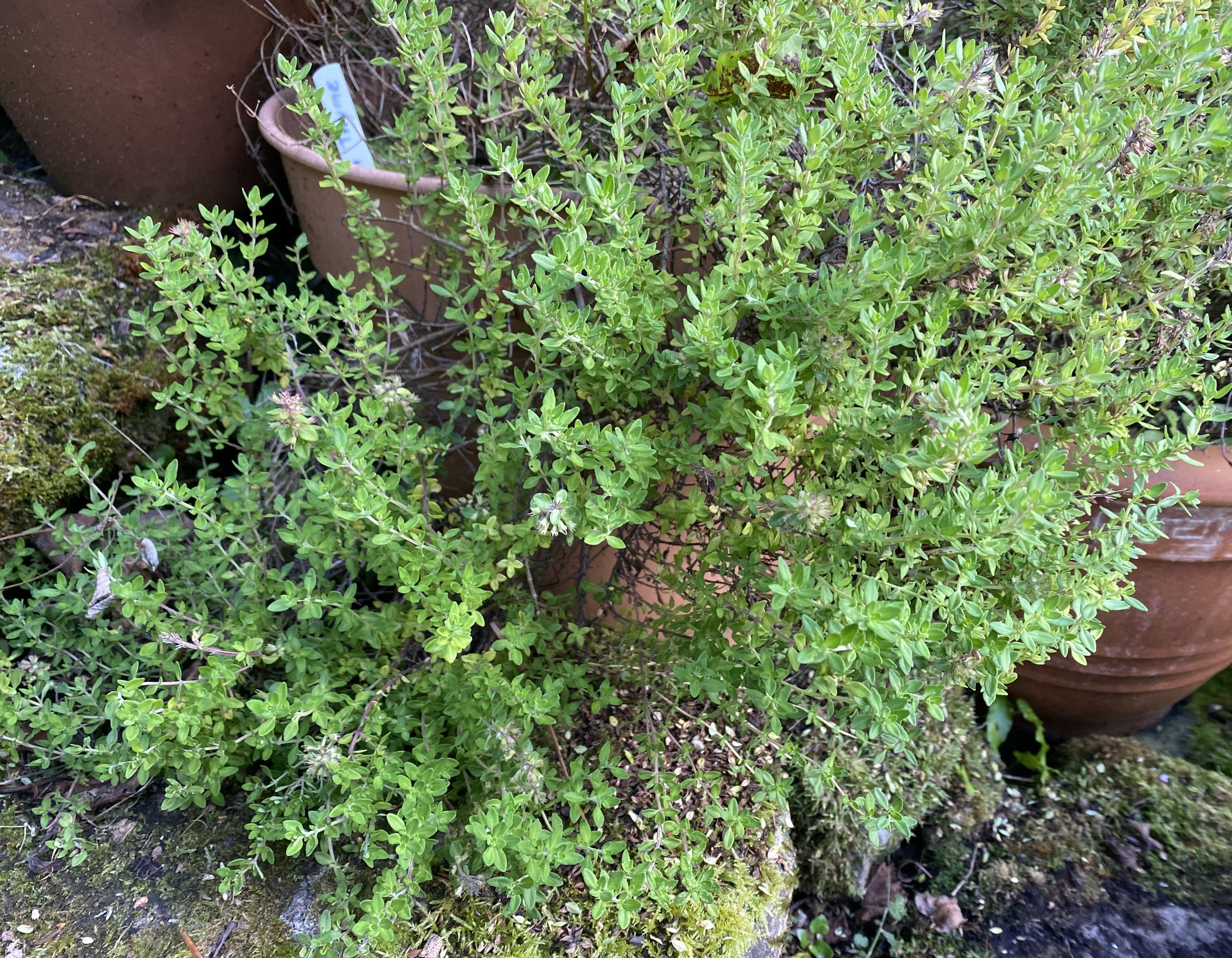
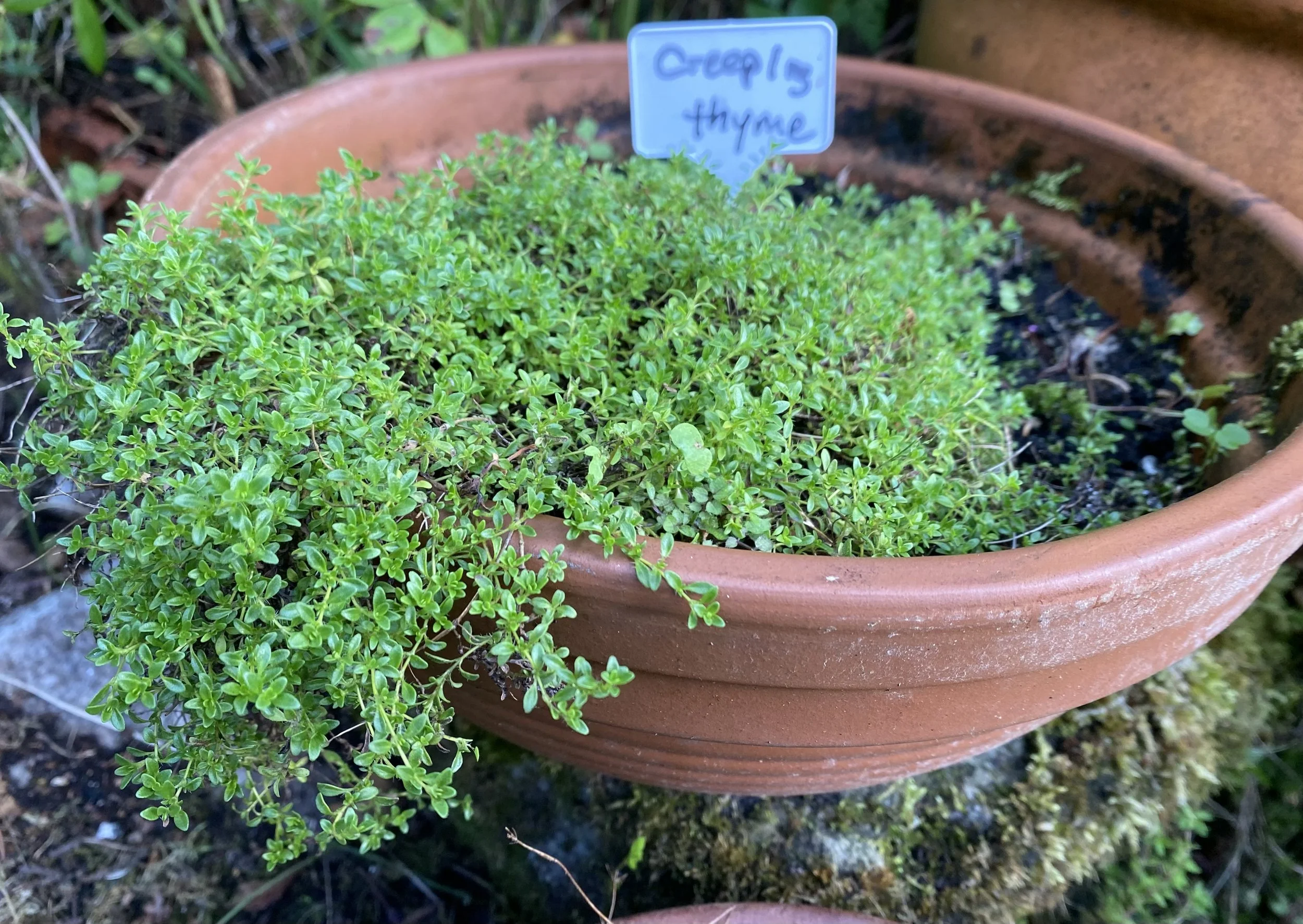
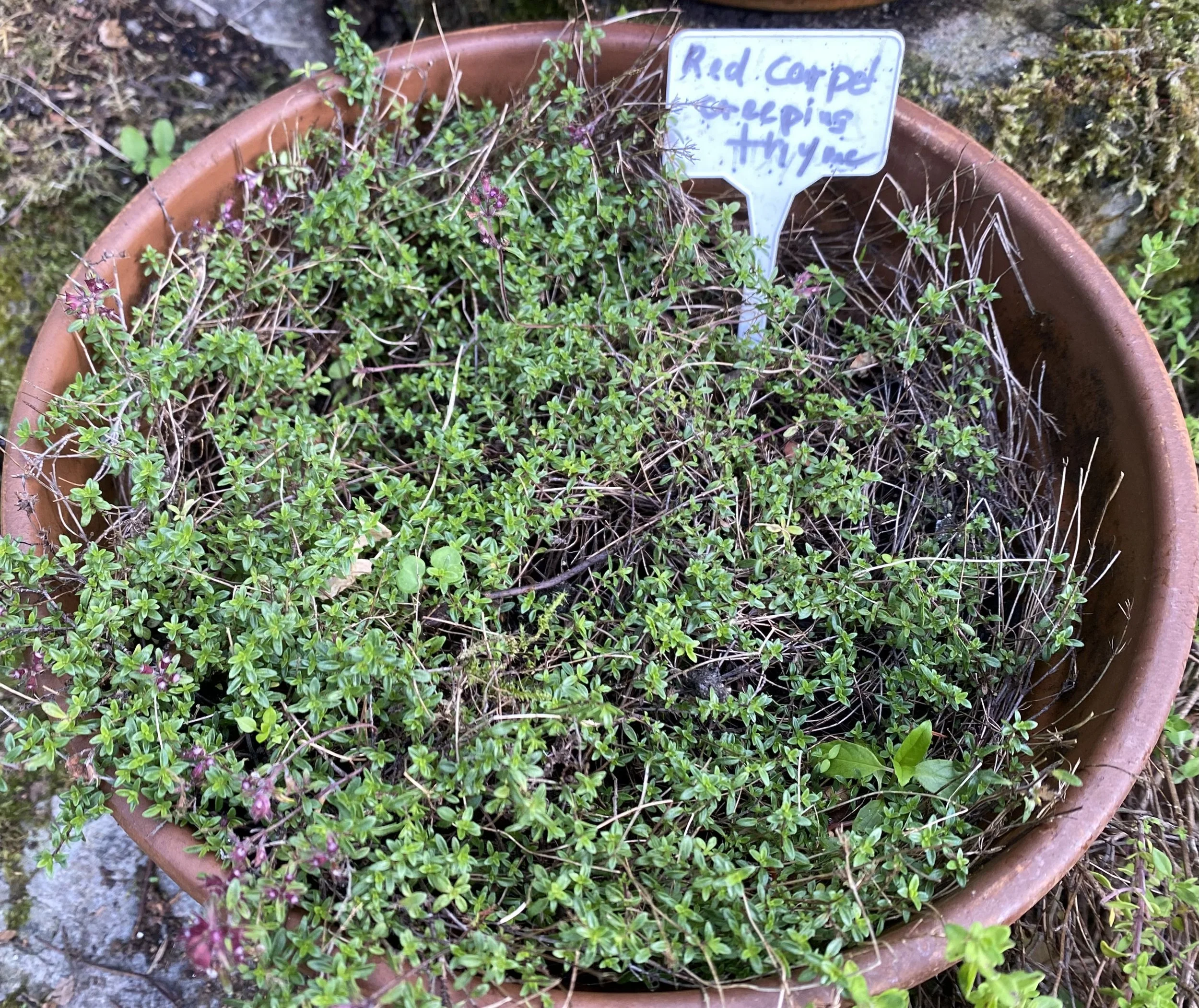
Thyme: Common thyme (Thymus vulgaris) is the best known of all the numerous thymes, its fragrant leaves are essential in bouquet garni. Lemon thyme is another lovely thyme which attracts bees and is good in fish and mushroom recipes, for pizzas and for tomato sauce. Our Thyme collection also has Creeping Thyme. Sow in spring into seed trays, barely cover the seed. Water sparingly and propagate at 15-20C. Later transplant into pots and let develop to strong plants before planting in final position.
Alternatively you can make cuttings.
Cut a sprig: Snip a 10 to 15 cm (4 to 6 inch) piece of new, non-flowering growth from a healthy plant.
Strip lower leaves: Remove the leaves from the bottom third of the stem.
Plant or root: Push the stem into moist, well-draining soil.
Keep moist, but don’t overwater: until roots form in a few weeks. Thyme needs a sunny spot on well-drained soil. They thrive in dry conditions. You can also grow them in big pots entirely. Trim back after flowering.
Mother of thyme or wild thyme (Thymus praecox) is often cultivated as an ornamental, but can be also gathered as a wild herb for cooking (used fresh or cooked), and drunk as a calming herbal tea. We find it on our daily walks at the dunes. This thyme brings colour and taste to your edible garden alongside health benefits as well!
How to use Thyme
For cooking remove the leaves from the woodier stems by running your fingers backwards down the stem.
Medicinal Uses
Thyme as a herbal tea or tincture- is a wonderful and powerful antiseptic (anti-viral,-bacterial, -fungal) herb that helps to calm dry, irritable coughs. Its volatile oil also produces expectoration and reduces spasm of an irritable cough, stimulates the immune system and circulation, is a liver tonic and is also good for digestion. Herbal teas are a very simple method of using herbs. The water should be just off the boil, since vigorously boiling water disperses valuable volatile oils in the steam.
Quick chest rub
Can be made by dissolving 30-40 drops of essential oil of thyme in 12 teaspoons of any cooking oil. Shake well and rub into the front and back of the chest before going to bed. For small children and those with sensitive skin use less essential oil. For babies use thyme or marjoram infused oils, as essential oils can be hard on their skins, even when diluted.
Thyme syrup for coughs and colds
Ingredients:
2 tbsp of Thyme
2 tbsp of Plantain
1 tbsp of Mint or use just 5 tbsp thyme (if you use dried herbs it is half the amount)
Method:
1. Make a herbal tea with 500ml/1 pint water:
2. Pour hot water just off the boil over the fresh or dried herbs and cover.
3. Steep for 15-20 minutes
4. Strain into a pan
5. Add 250grm honey or brown sugar
6. Keep warm until dissolved (for honey not more than 40C), if you use sugar simmer on low heat to thicken syrup.
7. You can add 1 tbsp brandy/vodka to stabilize syrup.
8. Once cooled fill into sterilised dark and store in a cool place or fridge for 3-6 month.
How to use the syrup:
Take 1-2 tsp several times a day for sore throats, coughs and colds. Alternatively you can add the syrup to hot drinks, adding freshly pressed lemon juice, some grated fresh ginger or a pinch of dried ginger, 1-2 cloves and maybe a pinch of cayenne.