
Cleavers and how to make coffee
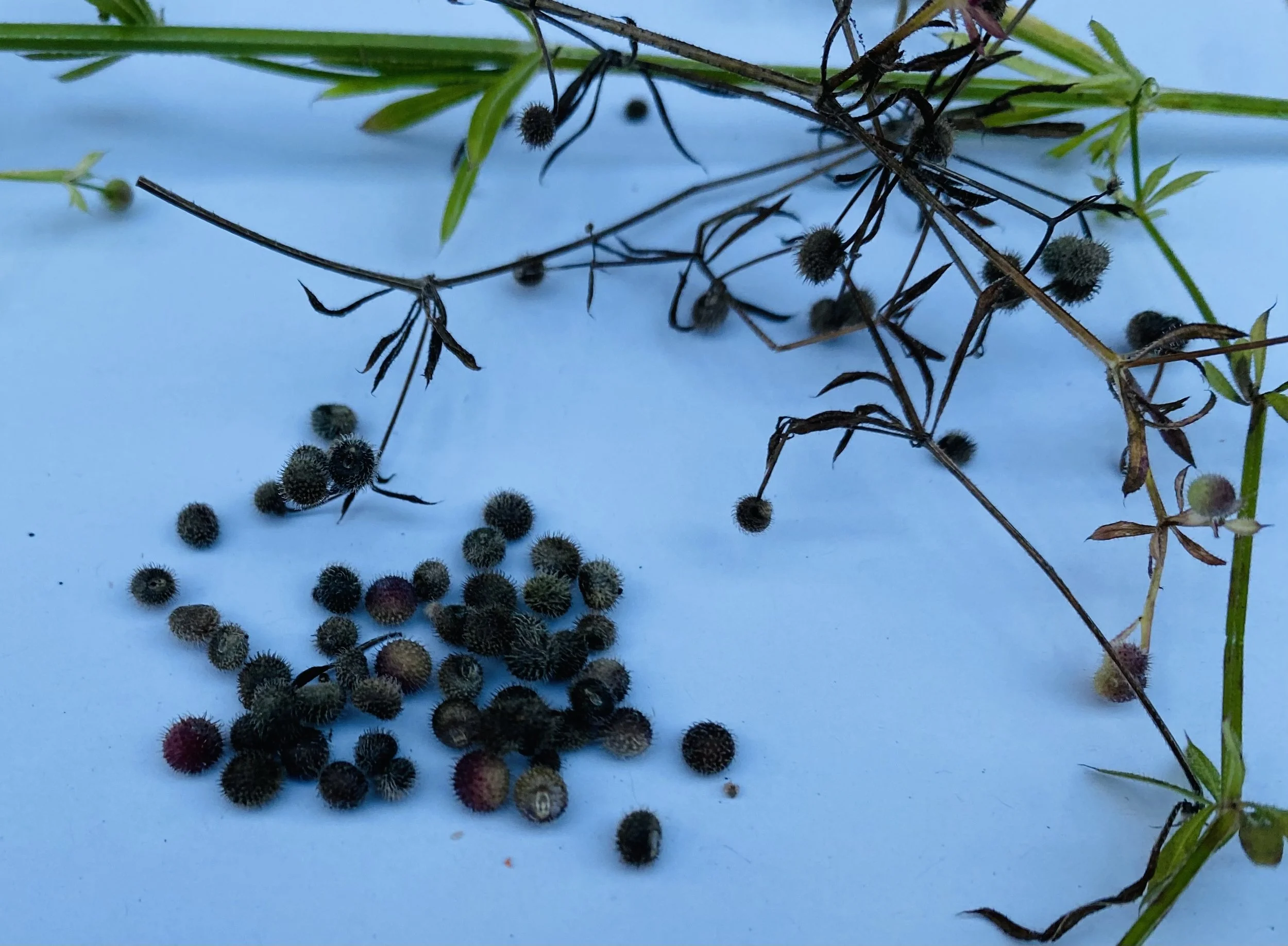
Cleavers (Galium aparine) commonly known as sticky willy or goosegrass, is in the same botanical family as coffee (Rubiaceae). Their roasted seeds yield a mild, nutty, and slightly sweet coffee alternative. While some herbalists note the seeds contain trace amounts of caffeine, their main draw is as a comforting, earthy brew. For committed coffee drinkers, this is the best wild substitute that you can find in the hedgerows. It may not impress espresso lovers though! However, it suits desserts faultlessly and can be used to make a coffee-flavoured drink with a mild caffeine hit.
Where to find cleavers?
Cleavers can be found in fields, crop fields and hedgerows. They prefer nutrient-rich soil, can survive dry conditions well and can grow from just above sea level up to 1,500 ft. A straggly, creeping plant that can grow more than 1 metre long. Each seed is covered in tiny hooks that attach themselves to pretty much anything, except plastic.
What are the benefits of cleaver seeds?
Cleaver seeds are a mild laxative, stimulate the lymphatic system and are good for treating urinary irritations. A word of warning though, don’t try and bite on dried cleaver seeds, they are very, very hard.
Foraging and Preparing the Seeds
Harvesting cleavers seeds is an excellent late-summer or autumn foraging activity.
Harvesting: Gather the brown, ripe seeds (found in small pairs) from mature cleavers plants in hedgerows or woodlands.
Pick the dry brown seeds and discard as much of the stems as possible.
Roasting: Preheat the oven to 180°C/fan 160°C, place the seeds on a baking tray and dry roast for 45 minutes to an hour.
Keep a close eye on them to prevent burning; you want them to turn dark brown and smell rich and coffee-like.
Grinding: Once the seeds have cooled, grind them into a powder using a pestle and mortar or a standard coffee grinder.
Brewing and Tasting Notes
You can use the roasted, ground cleaver seeds exactly as you would instant coffee or grounds for a French press or filter coffee. Use about one tablespoon of ground seeds per cup of hot or boiling water.
While it lacks the intense bitterness and strong body of traditional coffee, foragers note that the resulting brew has a cozy, earthy, and nutty flavour profile.
History
Over the centuries many different grains and plants have been used as an alternative or substitute for coffee. In the 2nd World War acorns and chicory were used. Brown rice and malted barley have also been used across the world. For me roasted rye and cleavers make the best alternative to coffee. Related to coffee, when roasted their flavour resembles coffee’s taste and smell. Cleavers even contain some caffeine. Each plant can produce hundreds of seeds, anything from 300 to over a thousand. Giving you a bounty to forage if you have the patience. Oh, and a little perspective, by the time you’ve finished reading this article, you could have collected enough seeds to make a mug of cleaver coffee.