
Tomato Care - the latest tips and tricks
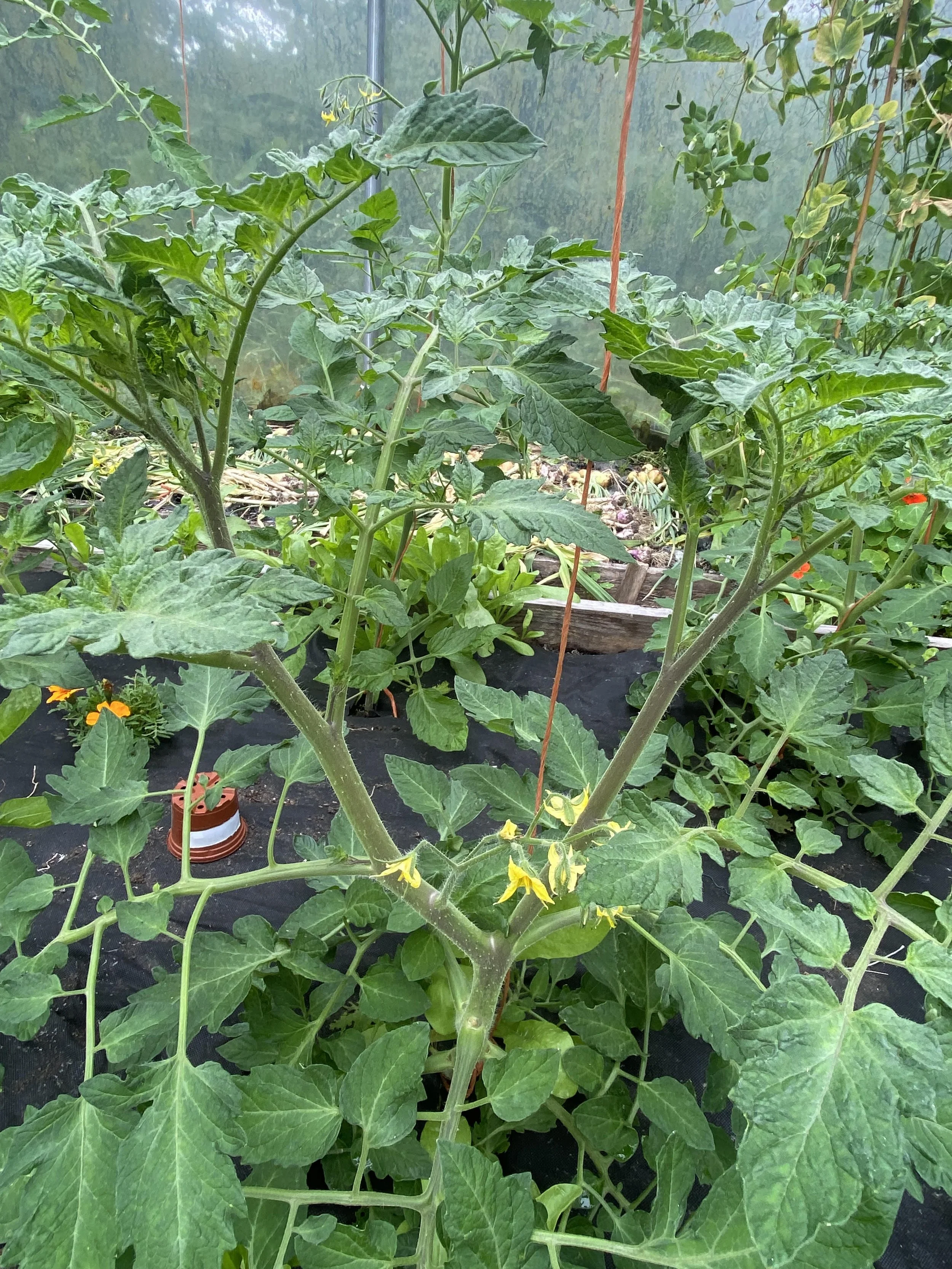
Pruning tomatoes: to sideshoot or not to sideshoot
The topic of side shooting tomatoes is in the news again. Regularly removing the new branches that grow in the axis (apex) between the main stem and a leaf on cordon (indeterminate) tomatoes directs the plant's energy toward ripening existing fruit, improves airflow, and prevents overcrowding, which helps guard against diseases like blight. This is the common wisdom, but the German “tomato whisperer” Thomas Seidl, asked about forgoing pruning, answered: “Completely foregoing pruning isn't possible, otherwise too much unruly growth develops. But I leave some suckers and train my plants with multiple shoots on the trellis. In my opinion, more green mass doesn't mean less energy for the plant, but rather more energy, and therefore more fruit. I train the shoots widely spaced up the trellis and make sure they are well-ventilated and dry after rain” (he grows tomatoes outdoors!).
Lydia the Gardener has another take on it: “Conventional wisdom has it that you must always pinch out the side shoots which develop on your tomato plants. This advice is so entrenched that even non-gardeners know about it. For years I have done this, believing it to be not only correct, but the only way to grow your tomatoes. Well, (in 2023) I'm doing things differently and I'm excited to report that leaving the side shoots on the plant is not only proving to be incredibly productive but it has caused me to seriously doubt what I've always believed to be true.”
We sideshoot our tomatoes and have always done, but often we, like a lot of gardeners, miss to pinch a sideshoot or the plant tricks us and we are too late. In that case we have grown tomatoes with two or sometimes tree main stems without problems, which leads us to believe that there is room for systems like favoured by Thomas Seidl above. We are intrigued to hear about your system and experience!
Too much water and fertiliser diminish the flavour
Joy Larkcom – Grow your own vegetables: “Tomato flavour is essentially a balance between acidity and sweetness. Inherent flavour is affected by many interacting factors and can vary from plant to plant, even from fruit to fruit on plant. First trusses generally best-flavoured. My hunch is that flavour is highest where watering and feeding are minimal, although sufficient.” Tomas Seidl agrees: “A plant that has to work hard develops mor aroma and flavour.” Joy Larkcom: “If flavour is your priority, I suggest growing varieties recommended for flavour, and not overwatering or overfeeding, even if potential yields lowered. Flavour is very subjective. Try a range of varieties to find what you like.”
Fermenting sideshoots rather than planting
Some gardeners recommend to plant sideshoots to grow new plants for a late harvest (weather permitting). Even if the weather permits this -in our experience- hardly leads to a lot of tomatoes. We collect all sideshoots in a bucket of water and ferment for a few days before we thin this brew 1:10 and use as a plant feed for the tomatoes with success.