
An appreciation of the Courgette
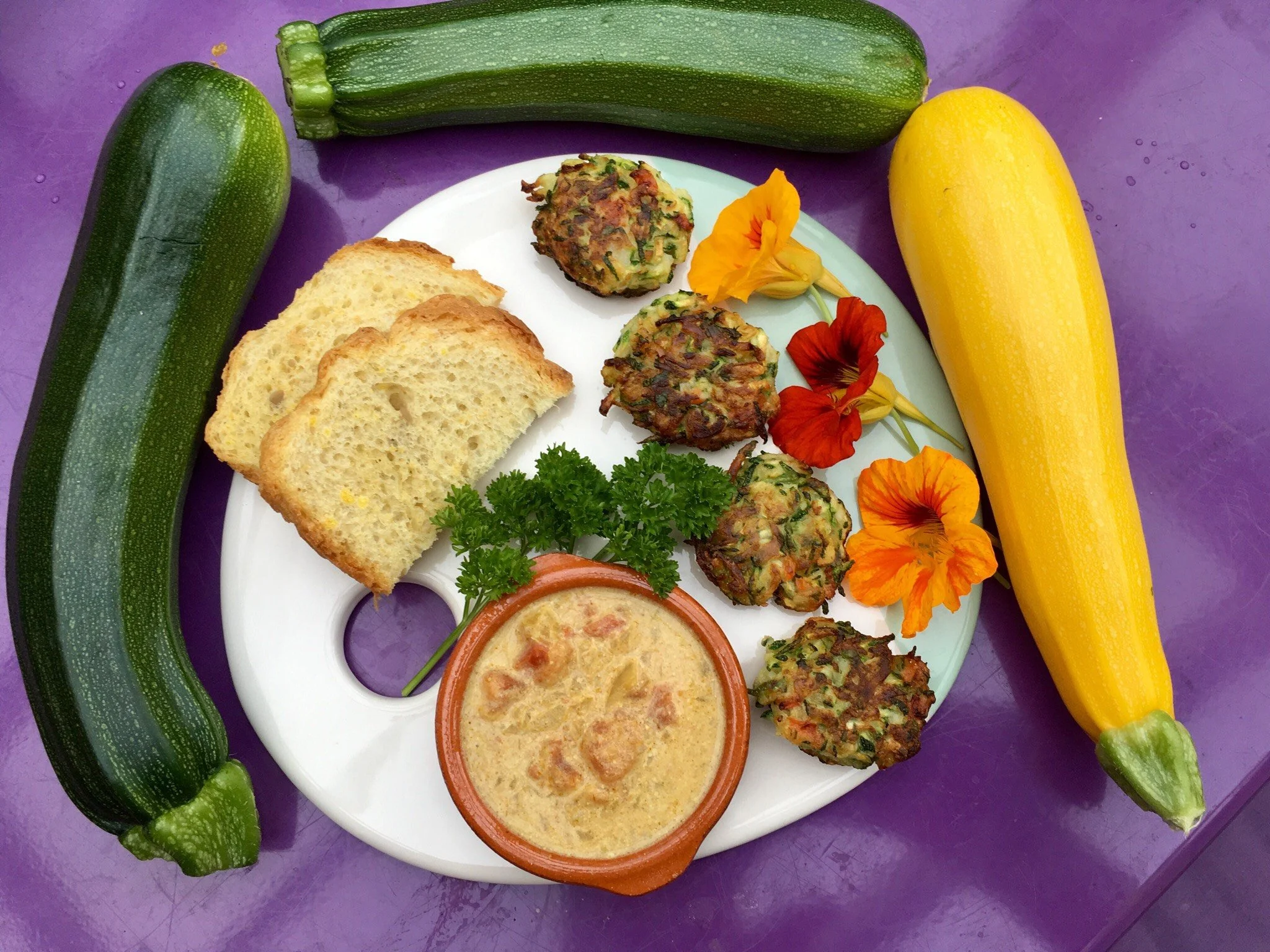
The botanical name is Cucurbita pepo var. giromontlini. In Ireland, France and England they are called courgettes, in Spain calabacinas, in Italy, America and Germany they are called zucchini, and in Switzerland Zuchetti. Both from the Italian Zucca = Squash
Versatile and fast growing
Courgettes are versatile and fast growing and a great crop for new gardeners. The ideal spot for a courgette plant is a sunny and warm location in nutrient-rich, humus-rich soil, which means in Ireland they are doing better in polytunnels and glasshouses, but can also be grown outdoors in a sheltered area.
Courgettes produce a lot of foliage and a generous spacing of at least 80 cm, ideally 1.5 m, gives the plant room and root volume to develop and absorb nutrients. When planting into their final position give them plenty of compost and mulch around the base to retain moisture. Plants need regular watering, especially once they start producing fruit. A handy tip is to stick a bamboo cane in the soil next to the plant base, then you know where to water once they start becoming giants!
Growing courgettes
We sow our courgettes usually in the third week of March and sow a few more at the beginning of June as replacements when the first batch gets exhausted by August.
The number of courgettes you harvest depends on environmental factors, but also heavily on the variety and, not least, on your own harvesting habits. If the plant doesn’t flower it could be not enough water, not enough or too much nutrients, not enough sun. So regular watering is important, we water every second day about 4 liters per plant (less when the plants are young).We feed with comfrey water once a week.
Remember courgettes are the young, immature fruits of what is known as Summer squash, so start harvesting when fruits are about 15-20cm long. The more you harvest, the more the plant produces. Left alone, a dainty courgette will quickly become a marrow-sized monster, watery and stringy, and lacking the sweet, nutty flavour of its younger self. If you are going on holidays tell a neighbour to help themselves. One plant can easily produce up to 20 courgettes or even more.
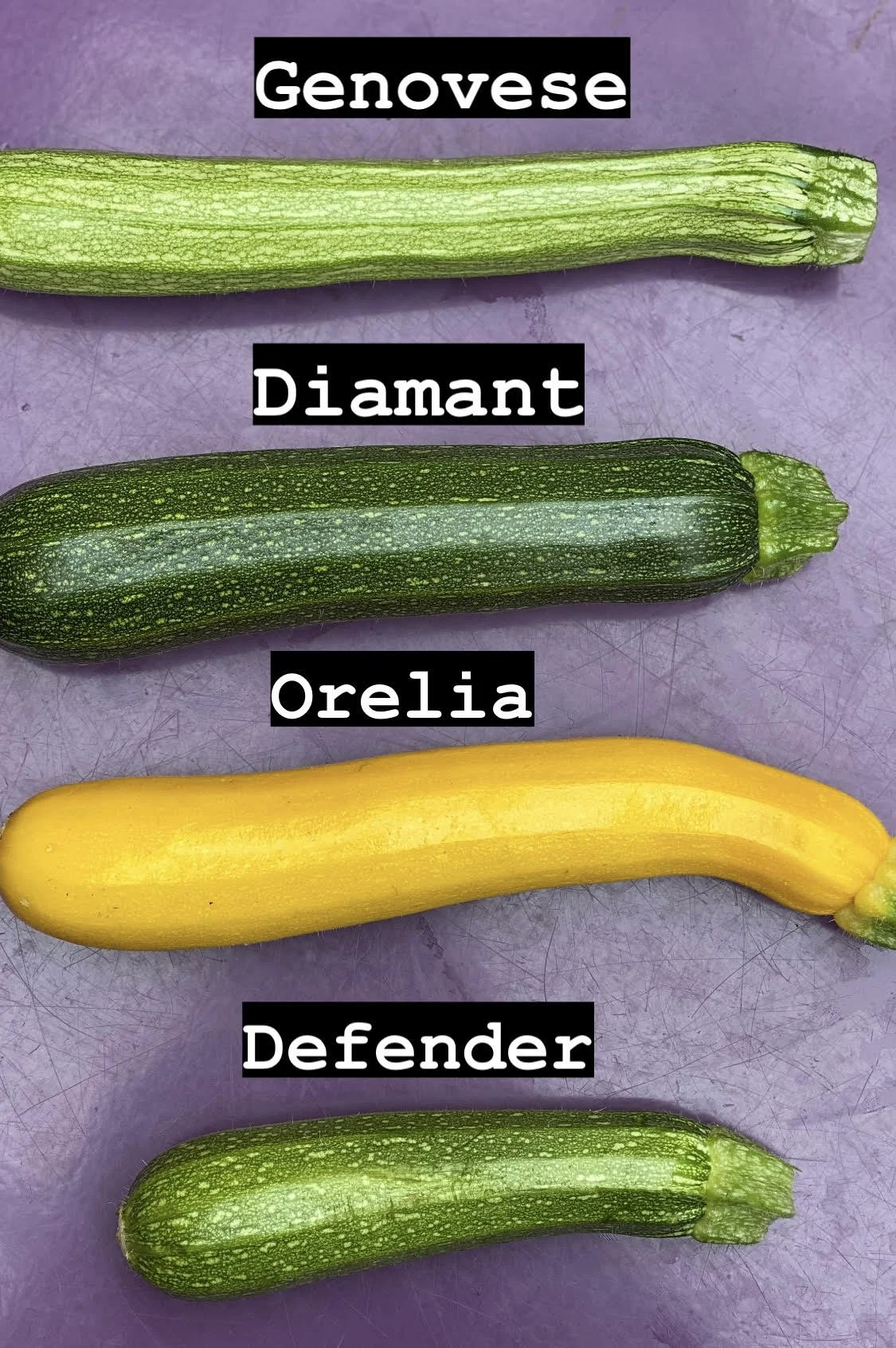
Our varieties for 2026 are Romanesco, Lingodor (yellow), Zuchetti, Diamant, Black Beauty and Defender.
Last year we had Genovese, an Italian heritage variety from the Irish Seed Savers and a yellow variety, Soleil.
Trombetta moana
Something new: Anyone who really enjoys courgettes or otherwise hasn't had much luck with them could try 'Trombetta moana' (“massive bearer" is the right term for this variety). Besides producing shoots several meters long, the plant develops a large number of long, snake-like, light green fruits. Despite their quantity, the fruits are tender and flavourful. The optimal harvest time for typical long-fruited courgette varieties is when the fruits are about 10-15 cm long and twice as thick as a thumb.
Courgettes and their health benefits
Courgettes are a pretty good vegetable to have on your plate if you want to lose weight. They are extremely low in calories (100g have only 14-17 kcal), but the high fiber content of courgettes means that you’ll feel full faster. Courgettes are also high in water, another good substance to consume if you want to feel full without actually eating a lot.
Often their nutritional value is underestimated, but courgettes are an excellent source of vitamin A, vitamin C, fiber, phosphorus, potassium, folate, vitamins B1, B3, and B6, vitamin K, and trace amounts of zinc, calcium, vitamin B2, iron, and choline. They are high in copper and manganese, important for bones and tissues.