
Garlic mustard (Allaria petiolate)
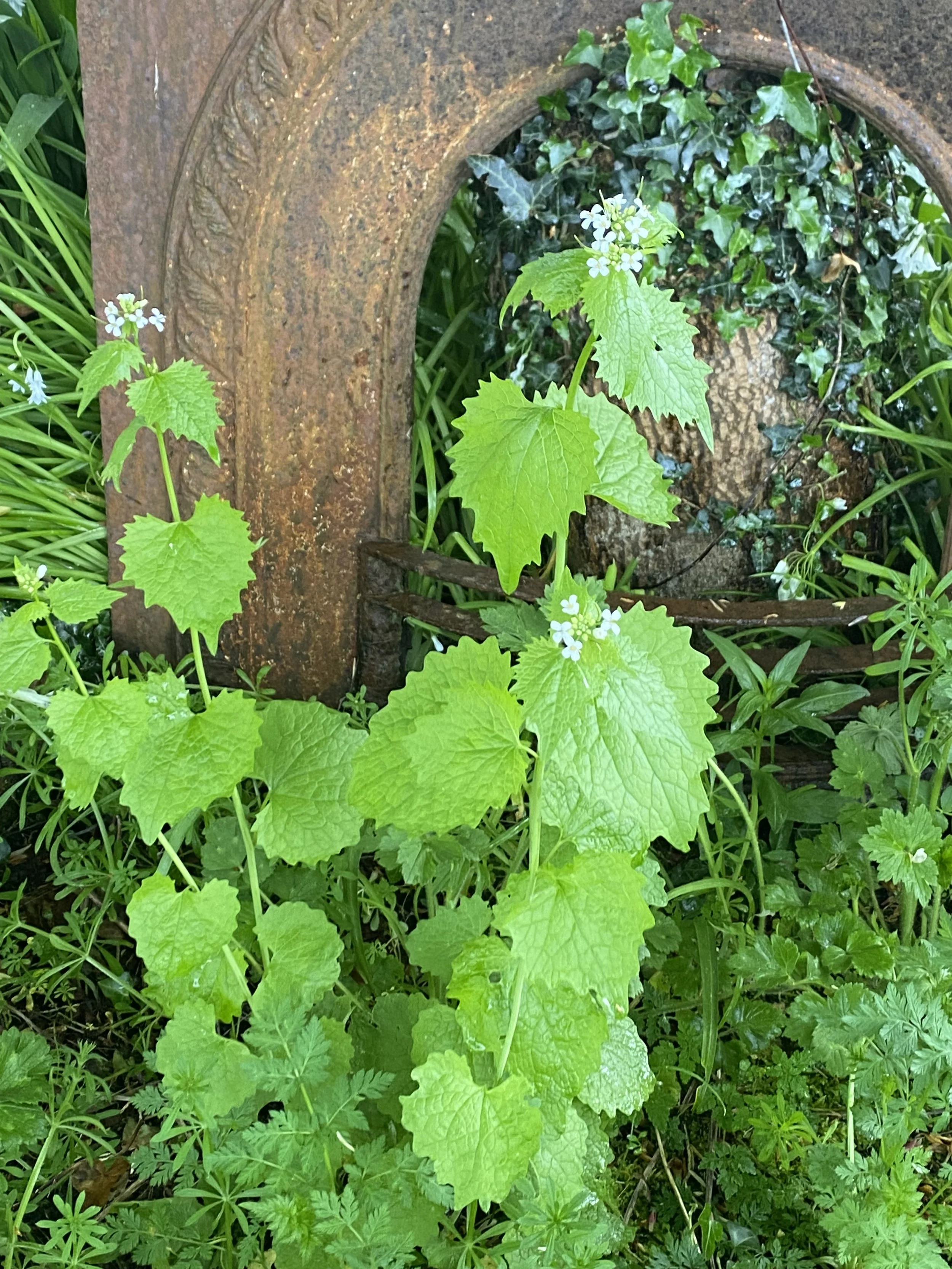
May invites you to gather fragrant, fresh wild plants. Garlic mustard is considered a real insider tip.
Medicinal Properties
The medicinal properties are due to the mustard oil glycosides, saponins, and essential oils contained in garlic mustard. Garlic mustard is considered to aid digestion and purify and stimulate the circulation of the blood. Garlic mustard greens are high in Vitamin A and C as well as trace minerals, chlorophyll and enzymes
Typical
The leaves smell of garlic when rubbed between your fingers. Young, fresh leaves have the strongest aroma.
Advantage
You don't have unpleasant garlic breath after eating the plant.
Uses
When garlic mustard is used medicinally, pressed juices from the whole plant are often used, or tea is prepared.
In the kitchen
All mustards are edible and garlic mustard has a special pungent garlic-like flavour and enhances spring salads, dips, and pestos. It can be added to many other dishes, depending on preference, e.g., omelettes or quiches.
Botanical
Garlic mustard is a biennial to perennial plant. It can reach a height of 20 to 100 cm. In the first year, it forms unbranched stems, each bearing a single leaf.
The plant has a peppery, spicy taste. Since the aroma of Alliaria petiolata dissipates quickly, the leaves should be chopped fresh or added at the end of cooking.
Note - Please do not pick all the leaves! They are important so that the plant can develop its pretty white flowers in the second year.