
The Sweet Chestnut Tree and the late Manchan Magan
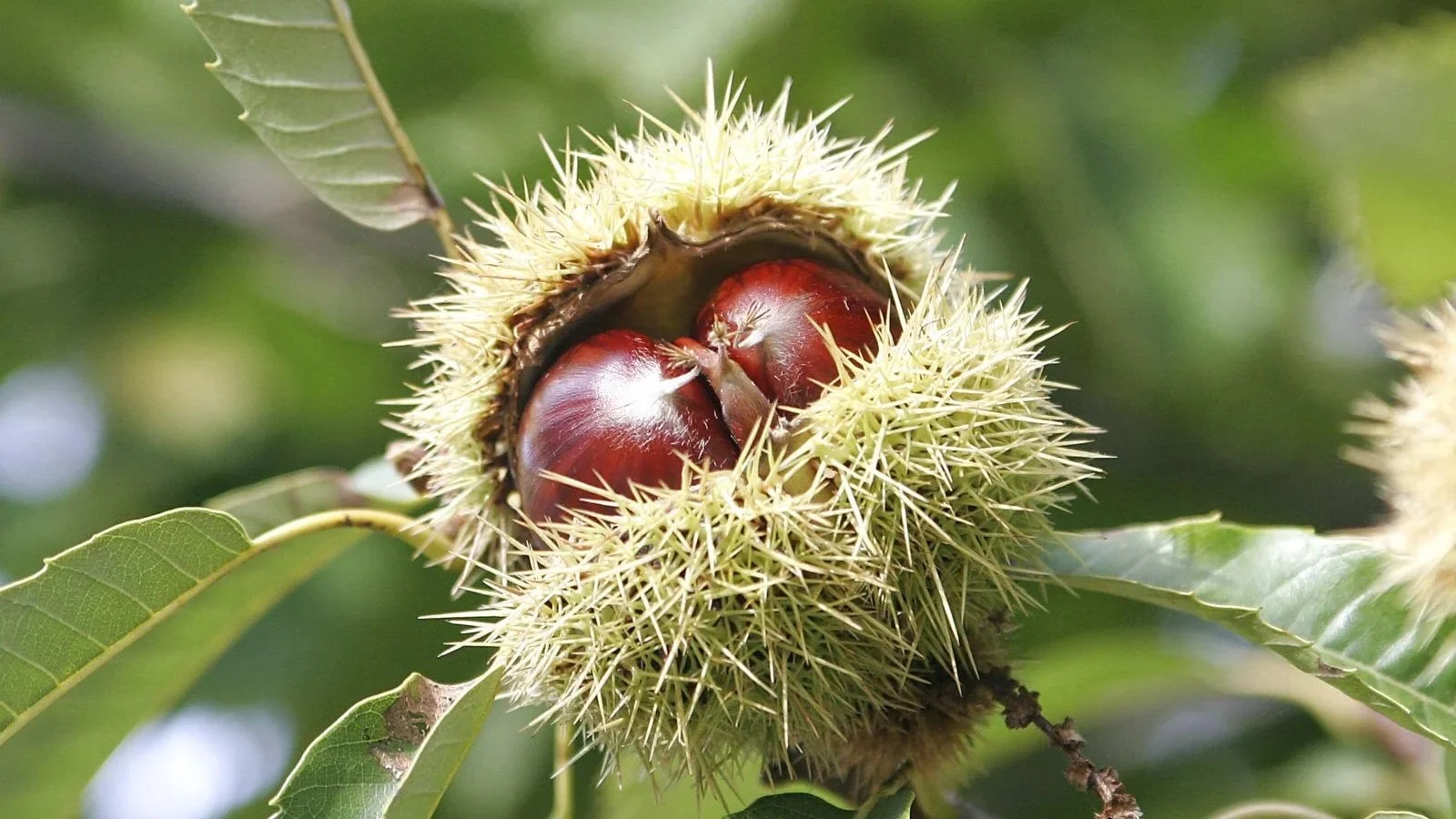
Hot Sweet Chestnuts - Marrons
The mere thought of marrons (hot sweet chestnuts), freshly roasted on the street, brings back memories from German Christmas markets. The comforting warmth in our hands as we peel the hot fruits on a freezing cold day. The delightful sweet interior bringing a feeling of happiness and contentment.
They are not that well known in Ireland, although that might be about to change. And in no small parts because the late Manchan Magan, writer, documentary maker and environmentalist, has championed the Sweet Chestnut tree.
Manchan Magan on the Sweet Chestnut Tree
The sweet chestnut was a central fixture on the five acres of land Magan spent decades cultivating around his home in Collinstown, County Westmeath. He focused on the sweet chestnut specifically because it perfectly bridged three of his core life philosophies: food security, landscape resilience, and the "naturalization" of introduced species. While the sweet chestnut is not technically native to Ireland—having been introduced to the island in the 17th century—Magan frequently highlighted it as a prime example of an introduced species that has become "naturalized" and deeply woven into the landscape. Magan was deeply involved with Hometree, an Irish charity dedicated to restoring native woodlands. In collaborative, nature-focused projects and spaces he helped inspire, visitors were invited to physically interact with the landscape—including instructions to "crawl under the sweet chestnut tree" to enter spaces dedicated to deep, meditative natural reflection.
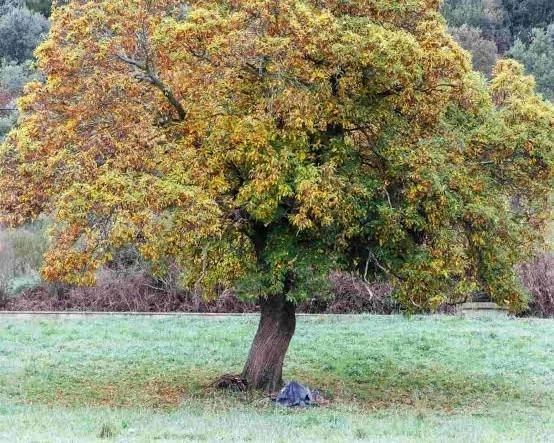
Sweet Chestnut Tree
Sweet Chestnut versus Horse Chestnut
The Sweet Chestnut is a majestic, long-lived hardwood belonging to the Fagaceae (beech and oak) family. It is a deciduous tree which can reach 35 m when mature and live for up to 700 years. It has a rugged, stately appearance and is highly valued for its edible nuts and durable timber. To this day, many regions in Southern Switzerland, Italy, and elsewhere are characterized by impressive chestnut forests. And people are beginning to appreciate the multi-purpose trees again. For Magan, the tree represents an accessible, calorie-dense carbohydrate source that grows freely in the climate.
The Horse Chestnut, often called the "conker tree," is a species belonging to the Sapindaceae (soapberry/maple) family. It is a common ornamental shade tree in urban parks and avenues, famous for its toxic seeds used in the traditional game of conkers.
Edible Chestnuts – Health Benefits
What is now enjoying a revival as a delicacy was for centuries a staple food, especially for the poor population of the mountainous regions of Southern Europe. It was no coincidence that sweet chestnuts were called “the poor man's potato”and “the common man's bread”.
The nuts are such a good source of food that in some Mediterranean countries they are a common food, often dried and ground into flour. Naturally gluten-free ground chestnut flour serves as an ideal safe alternative for people with celiac disease or gluten sensitivities. Sweet chestnuts provide a unique mix of high fiber, antioxidants, and vitamin C while remaining remarkably low in fat compared to other nuts. They contain only 2 percent - other nuts usually contain over 50 percent fat. Sweet chestnuts can technically be eaten raw, but they must always be cooked before regular use due to their high tannic acid content and hard, bitter inner skin.
Marrons are said to strengthen the heart and kidneys because of their nutrients and deliver positive health benefits. Chestnut leaves are also useful as a household remedy. A steamy bath with the leaves is said to help with an irritable cough. First and foremost, however, we love sweet chestnuts for their tasty and versatile fruits.
Where to get if you don’t have trees
You can buy sweet chestnuts (Marrons) in delicatessen and health food stores and nearer to Christmas also in shops like Supervalu etc. They are usually available as a paste or whole already peeled and cooked in a tin or jar.
Note: Raw chestnuts contain high levels of tannic acid, which can cause stomach irritation or a very bitter taste if not softened. Cooking (roasting, boiling, or microwaving) converts starches to sugars, softens the starchy flesh, and makes it much easier to peel away the tough outer shell and bitter inner skin.
Safety: Always cut a slit, cross, or "X" into the shell before heating them in an oven, pan, or on a grill/open fire to prevent pressure build-up and mini-explosions.