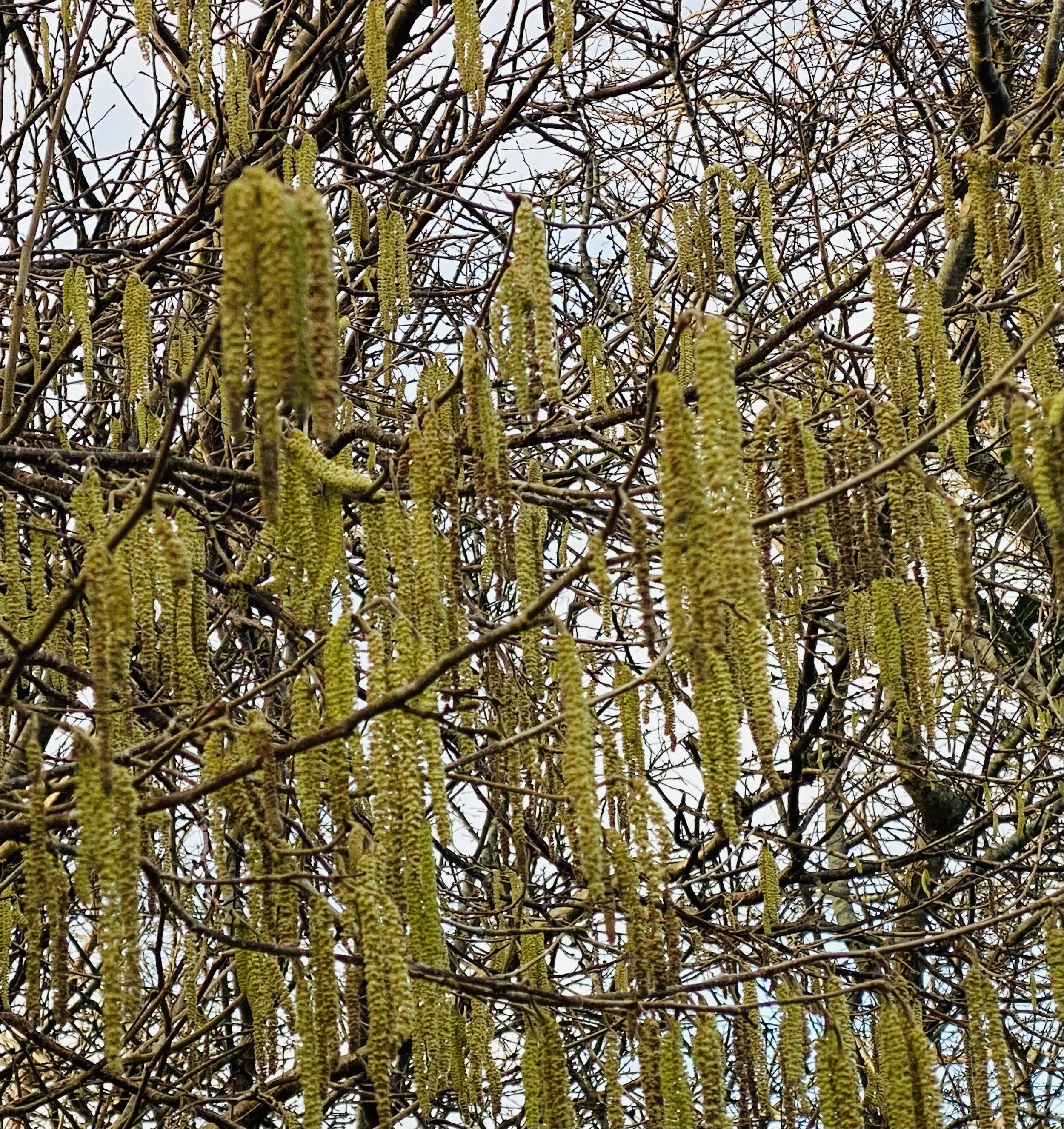
Catkins are edible
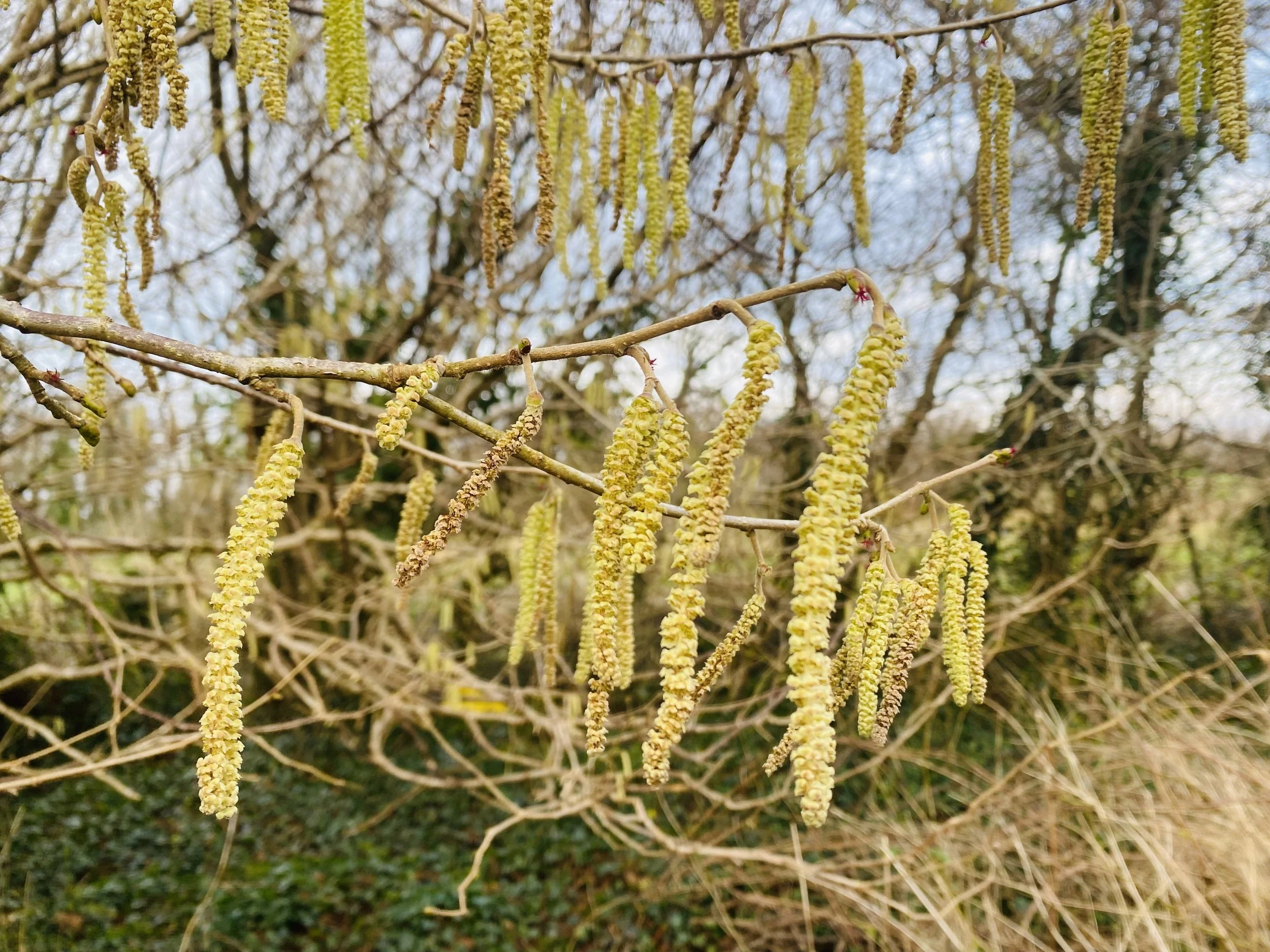
There are several types of tree catkins, the dangling, pollen-producing male flowers of early spring. They resemble "kitten tails" or small, furry caterpillars, which is where they get their name (from Dutch katteken). They are reproductive structures that enable early-season wind pollination when insects are sparse. Catkins are edible, with Hazel (Corylus avellana) being the most popular due to its mild flavour. Other edible options include Alder, Birch, and Willow, though they are often quite bitter or astringent. They are best harvested in early spring and often used in teas (see below). Roasted, crushed catkins are wonderful instead of breadcrumbs or mixed with them, e.g. as breading for cauliflower or fried in butter and placed over the cauliflower.
Common Edible Catkins:
Hazel Catkins: The most commonly foraged, these are yellow-green and appear in late winter. While edible raw (bitter), they are often dried, roasted, or brewed into tea. They are high in protein and pollen, and can be ground into a flour or added to bread and porridge.
Alder Catkins: These are edible and sometimes eaten raw or cooked, though they are often quite bitter. They are often used as a survival food.
Birch Catkins: These can be eaten but have a very bitter, resinous, or piney flavour, and are better if boiled, though boiling can increase bitterness.
Willow Catkins: Young willow catkins are considered a survival food, and the buds can be eaten for a good source of Vitamin C.
Poplar Catkins: These are generally considered edible and can be eaten as a foraged item.
Preparation and Safety:
Taste: Many catkins are quite bitter and astringent due to high tannin content.
Preparation: Boiling for 5 minutes can improve the texture and flavour. Drying and powdering is a popular way to use them in baked goods.
Harvesting: Only collect from areas free of pollution and, for Hazel, pick no more than 20-30% from a single tree to avoid damaging the future nut crop.
Always ensure proper identification before consuming, as some trees may cause allergic reactions.
HAZEL CATKIN TEA
Sweat-inducing, circulation-stimulating, detoxifying – a hot infusion of hazel catkins can be very helpful, especially for minor ailments in late winter. Due to the abundant minerals such as calcium, magnesium, and iron found in hazel catkins, as well as the phytohormone κ-sitosterol, naturopathy recommends a revitalizing treatment with hazel catkin tea. For this, one should drink a cup of hazel catkin tea daily for 1-2 weeks.
To prepare it, steep 1-2 tablespoons of hazel catkins in 250 ml of boiling water, cover, and let it infuse for 4-5 minutes. Strain and enjoy.