
Almonds - buy organic grown in Europe
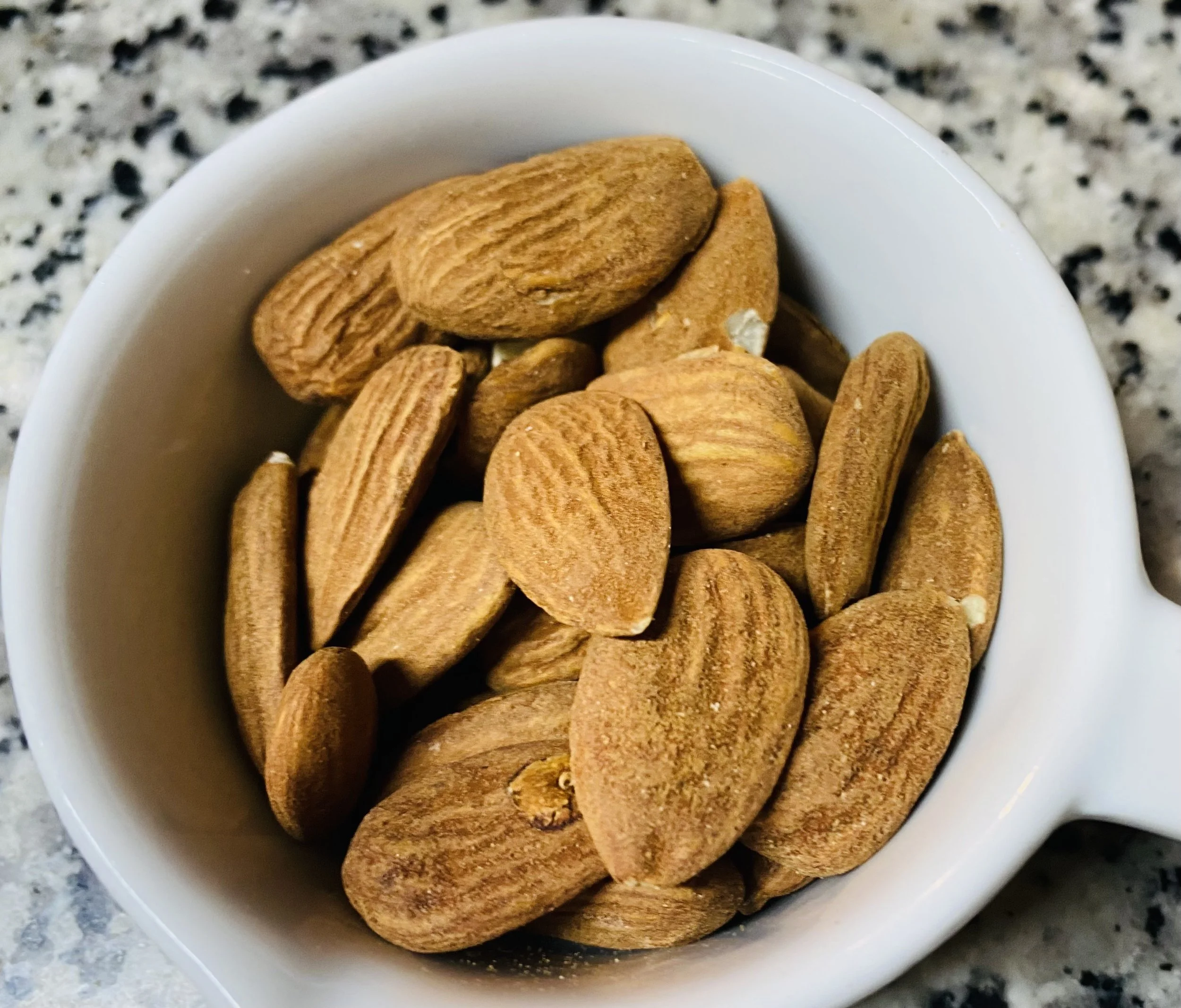
Christmas baking and an article in a German Healthfood Magazine sparked this article about almonds. At Christmas the scent of cinnamon and vanilla wafts through kitchens as many of us are busy baking Christmas biscuits and often ask for almonds. And then there is Marzipan, essentially a paste of sugar and almonds. For many almonds are "just" a baking ingredient, but behind every almond lies a story that extends far beyond the biscuit. A story of climate extremes, of farmers who passionately fight for organic farming, and of a crop that symbolises the value of sustainable agriculture in Europe.
Let's start at the beginning!
Almonds grown in California versus Spain
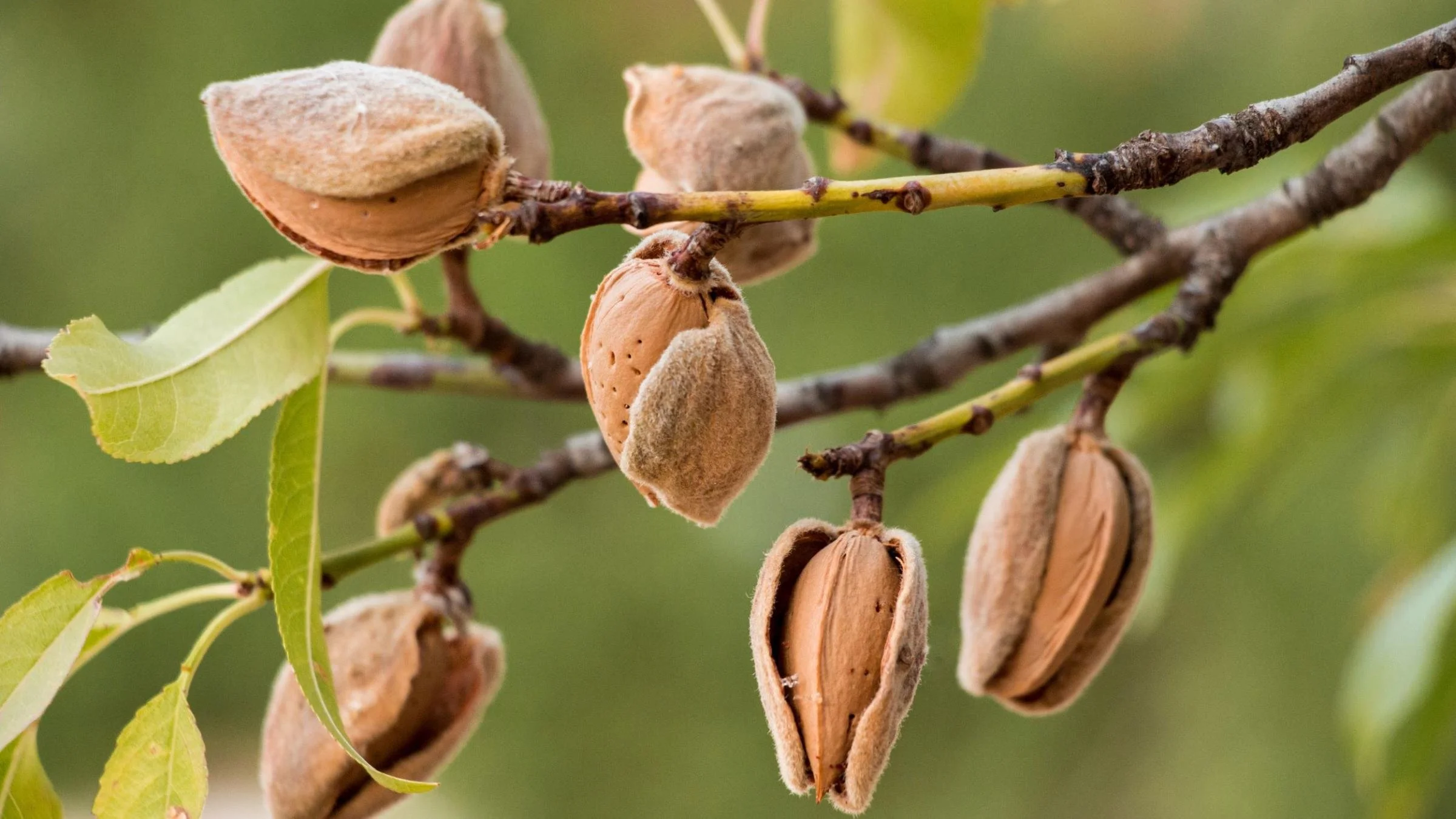
Almonds are the world’s largest tree-nut crop. They are the seed of a plum like stone fruit. There are several dozen wild species, but the cultivated almond (Prunus amygodalus)) came from western India. Almond cultivation was spread by humans centuries ago along the shores of the Mediterranean Sea into northern Africa and southern Europe and more recently to other world regions, notably California, now the largest producer (80%).
The main problems with almonds from a sustainability standpoint are water and pesticide use. An enormous amount of water is needed in the production of almonds. It takes 1.1 gallons of water to grow a single almond and roughly 1,600 gallons to produce one liter of almond milk. California grows almost 100% of almonds in the U.S. and has been in drought for most of the last decade. A disproportionate 10% of the agricultural water supply in California is devoted to growing almonds and California simply does not have enough water to support growing this number of almonds forever.
Pesticides are also a big problem when it comes to almonds. More pesticides are used on almonds than any other crop in the state of California. It is a vicious cycle: One of the most widely used pesticides is glyphosate, which is toxic to bees, which are essential for pollinating almond trees. Pesticides also seep into the groundwater supply, contaminating the already limited supply of water in California and making it unsafe for human consumption.
Organic almonds represent a very small fraction of the total almond market in California. Based on recent data, organic almonds account for about 1% of the state's total almond production. (Wikipedia)
Below: On the left small organic farm in Spain, on the right big farm in California.

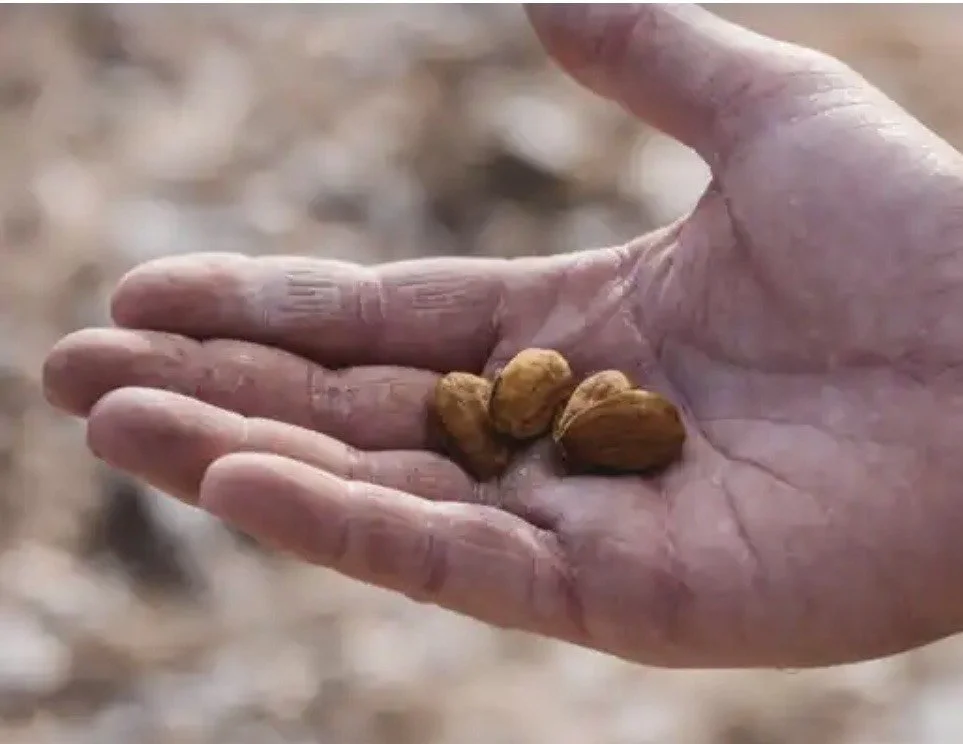
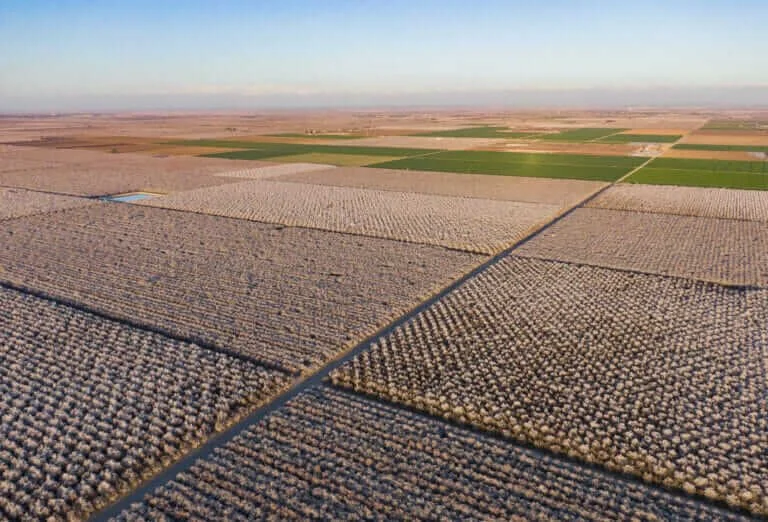
If you do consume almonds, think about buying organic and buying almonds grown in Spain the main producer in Europe and second largest in the world. In Spain organic cultivation reached about 26% of the total almond area by mid-2025, a significant increase from around 16% of total production volume in 2023, indicating rapid growth in organic farming.
Almonds grown in Spain - a case study
A recent article in the German magazine “Schrot & Korn describes visiting the almond groves in Spain: “We experience organic farming characterised by tension, yet also by foresight: Bone-dry hills, blossoms that are a good four weeks ahead of schedule—a sign of climate change.”
Almonds thrive in dry conditions, but drought and heat in Spain reduce yields and stability. In several Spanish regions, flowering begins measurably earlier, increasing the risk of late frosts. Almonds rely on insect pollination, mainly bee. Hedges and wildflower strips are becoming crucial production factors. On top of that, the almond seed wasp is spreading in several Spanish regions. It lays eggs in young fruit buds—the larvae consume the developing kernels, leading to significant yield losses. This poses a particular challenge for organic farms, as chemical pesticides are prohibited.
“But instead of giving up, organic farms are developing strategies to protect their crops: from site-adapted varieties to biodiverse plantings. In this way, every challenge becomes an impetus for greater sustainability. Therefore, creativity is key: many are relying on preventative measures, planting hedges, promoting beneficial insects, and hoping for stable pollinator populations. Bee hotels at the edge of fields have long been standard practice. This is just one example of how organic farming not only produces food but also strengthens entire ecosystems.” (Schrot&Korn)
Often climate change and pests are overshadowed by "Spain Vaciada"—a depopulated Spain.
Young people are drawn to the cities, and agriculture is left behind. But it is precisely here that the strength of organic farming becomes apparent: those who grow almonds organically today do so out of conviction and with an eye to the future.
Almonds from La Junquera via Crowdfarming
These farms focus on healthy soils, biodiversity, and food without chemicals—values that are becoming increasingly important. On such example is La Junquera in Murcia: “Our farm is called La Junquera because of the spring below it, the source of the River Quípar, It covers 1,100 hectares and is located in the Altiplano Murciano at 1,100 metres above sea level and surrounded by mountains between 1,500 and 2,400 metres high. In keeping with our organic philosophy, we now only use rainwater on the farm, and we take advantage of every last drop. This involves using techniques that stop us from losing water in the ground, such as increasing the amount and quality of organic matter in the soil. We've also built trenches following the contour of the land and ponds to store rainwater. Not only does this help retain water on our farm, but it also helps refill aquifers, maintain nutrients in the soil and, therefore, increase biodiversity.”
Nutritional value
Almonds are 4% water, 22% carbohydrates, 21% protein, and 50% fat. They are a nutritionally dense food, providing a rich source of the B vitamins riboflavin and niacin, vitamin E, and the essential minerals calcium, copper, iron, magnesium, manganese, phosphorus, and zinc. They also contain substantial dietary fibre, the monounsaturated fat, oleic acid, and the polyunsaturated fat, linoleic acid. Thanks to their high content of antioxidant Vit E and low levels of polyunsaturated fats, almonds have a very long shelf life and are loaded with antioxidants. (On Food and Cooking, Harold McGee).